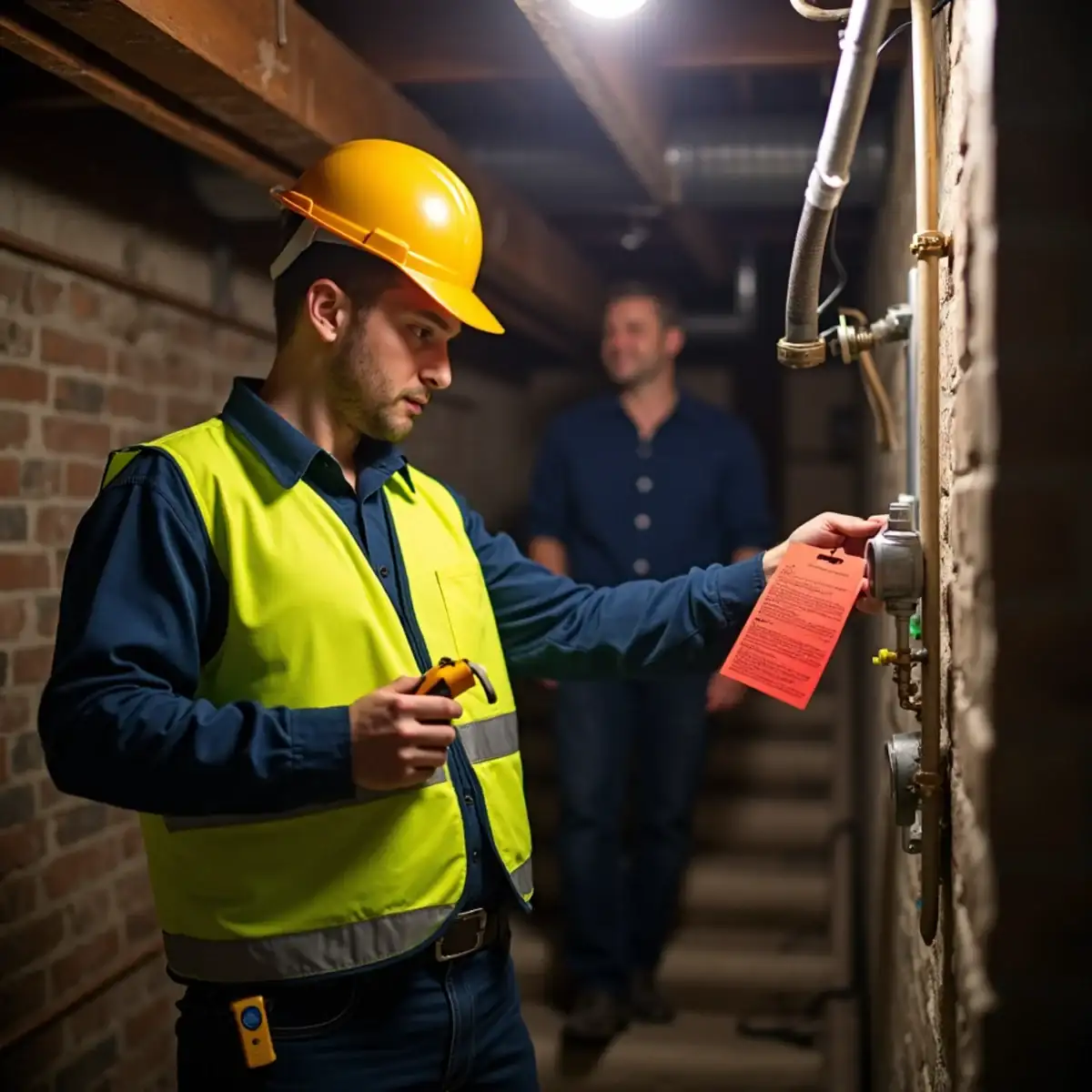
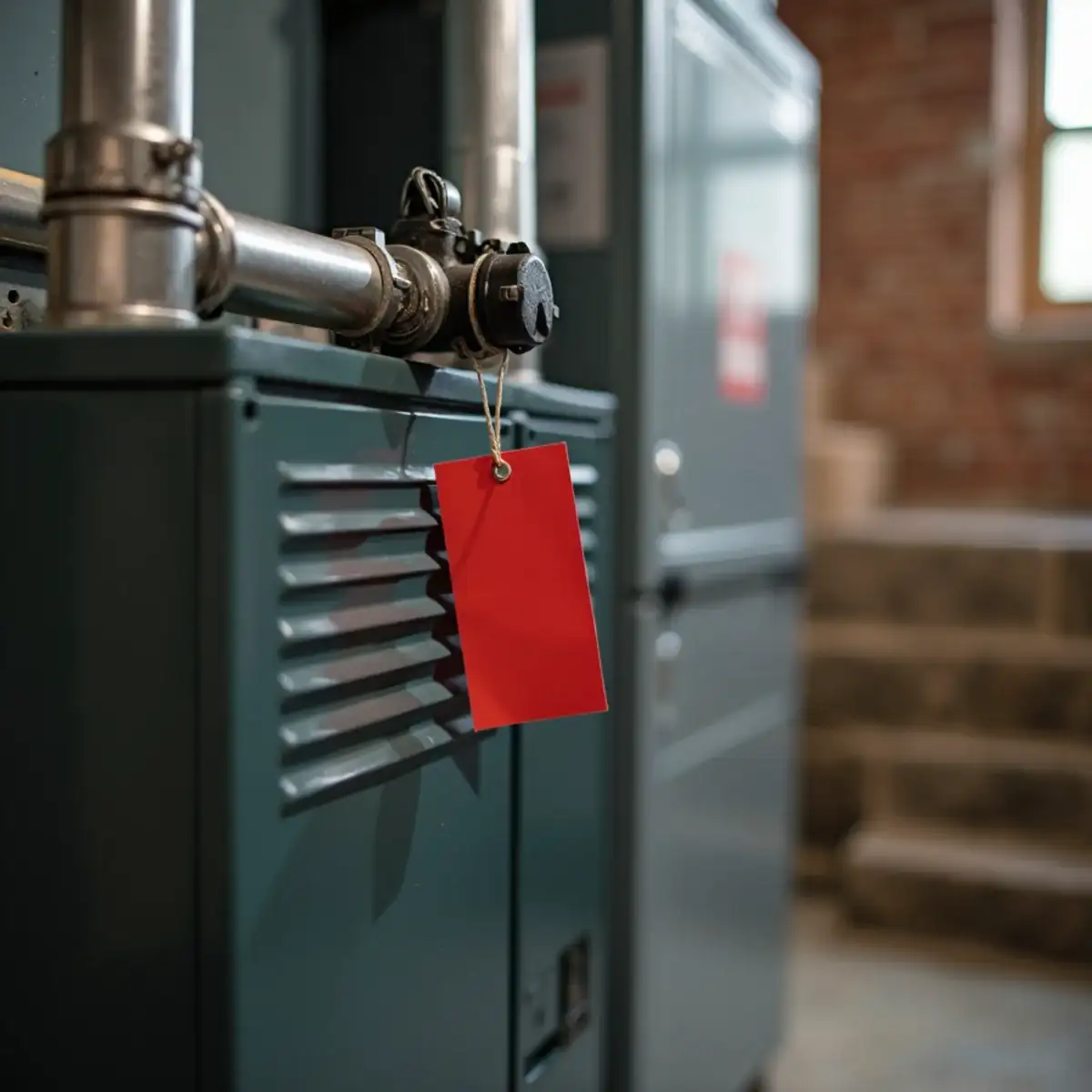
If your furnace has been red-tagged and the house is getting cold, call (321) 478-0693 and we will dispatch a local HVAC technician to look at it, day or night. A red tag means someone qualified found a condition they considered dangerous, turned the gas off to the appliance, and left a written warning. It is a stop sign, not a suggestion.
Red tags are common in Pittsburgh. Many furnaces here are 15 to 25 years old, sit in damp basements and vent into brick chimneys built for an older appliance, which leads to cracked heat exchangers, rusted flue pipe and poor draft. Below: what the tag means, what not to do, and how a second opinion works. The same steps apply if the gas company shut off the furnace after a leak call, if it failed a safety inspection during a tune-up or a home sale, or if a technician suspects a carbon monoxide leak and you want a furnace second opinion before paying for a new one.
What a red tag means and who can put one on a furnace
A red tag is a warning and shut-off notice. In Allegheny County it is usually hung by a field technician from the gas utility, most often Peoples or Columbia Gas of Pennsylvania, after a leak call, a meter change or a reading taken during a service visit. An HVAC technician can also red-tag a furnace when a tune-up or repair turns up a hazard.
Usually the gas valve feeding the furnace is turned off, sometimes locked, and the tag states the reason. Do not remove the tag, cut a lock or turn the valve back on yourself. Beyond the safety risk, it can complicate getting service restored.
- Gas utility tag: often limited to the furnace, sometimes the whole meter if the leak is upstream of the appliance.
- HVAC technician tag: usually tied to a measured hazard such as carbon monoxide in the supply air or a failed draft test.
- Inspection or sale tag: a home inspector may flag a furnace, but the formal shut-off normally comes from the utility or a technician.
Keep the tag and any paperwork. The technician who repairs the furnace will need to see exactly what was written on it.
Common reasons: cracked heat exchanger, carbon monoxide readings, failed venting, gas leaks
Almost every red tag on a gas furnace traces back to one of four problems. The table shows what a technician checks for each and the usual result. The outcome always depends on what the inspection finds in your furnace.
| Reason on the tag | What the technician checks | Typical outcome |
|---|---|---|
| Cracked or holed heat exchanger | Camera inspection of the cells, combustion analysis, CO in the supply air, flame behavior when the blower starts | Heat exchanger replacement if parts exist, otherwise furnace replacement |
| High carbon monoxide reading | Burner condition, gas pressure, combustion air, flue blockage, flame rollout | Often a cleaning, adjustment or venting repair; sometimes traced back to the heat exchanger |
| Failed venting or draft | Draft at the flue, chimney liner and clean-out, flue pipe slope and joints, PVC vent terminations | Flue pipe repair, chimney liner, or clearing a blocked vent |
| Gas leak at the appliance | Leak test of the gas valve, unions, flex connector and drip leg | Fitting or connector replacement, or a new gas valve |
Venting failures are common in older city homes, where an 80% furnace still exhausts into an unlined brick chimney. Condensation crumbles the mortar, debris piles up at the base and the flue chokes. On a high-efficiency furnace, a crushed or disconnected PVC vent does the same.
Those four cover most tags, but not all of them. Technicians and utility crews also tag furnaces for an old or damaged flexible gas connector, burners and heat exchangers rusted through by water from a leaky humidifier or a flooded basement, and missing or makeshift vent connections. Whatever the reason, it's written on the tag, and that wording is what the repair has to answer.
What to do first, and what not to do
Once the utility or technician has left and the house is safe to occupy, your job is to keep the family warm and get a qualified repair lined up. Here is the order that works.
- Read the tag and any written notice, and take a clear photo of both.
- Photograph the furnace data plate as well, and ask whoever inspects it next to photograph or record what they find, including camera images of the heat exchanger.
- Make sure your carbon monoxide alarms work and are on every level.
- Call (321) 478-0693 and describe what the tag says, the furnace age and, if you can see it, the model number on the data plate.
- Keep the house above freezing with safe heat sources while you wait; see the steps on our emergency furnace repair page.
- If you rent, tell your landlord or property manager the same day.
- Do not remove the tag or turn the gas valve back on.
- Do not let anyone relight the furnace before the hazard is repaired.
- Do not heat the house with the oven, a grill, a camp heater or a generator indoors.
- Do not use space heaters unless they are listed for indoor use, with three feet of clearance.
- Do not agree to a replacement on the spot if you have doubts about the diagnosis.
Getting a second opinion on a cracked heat exchanger
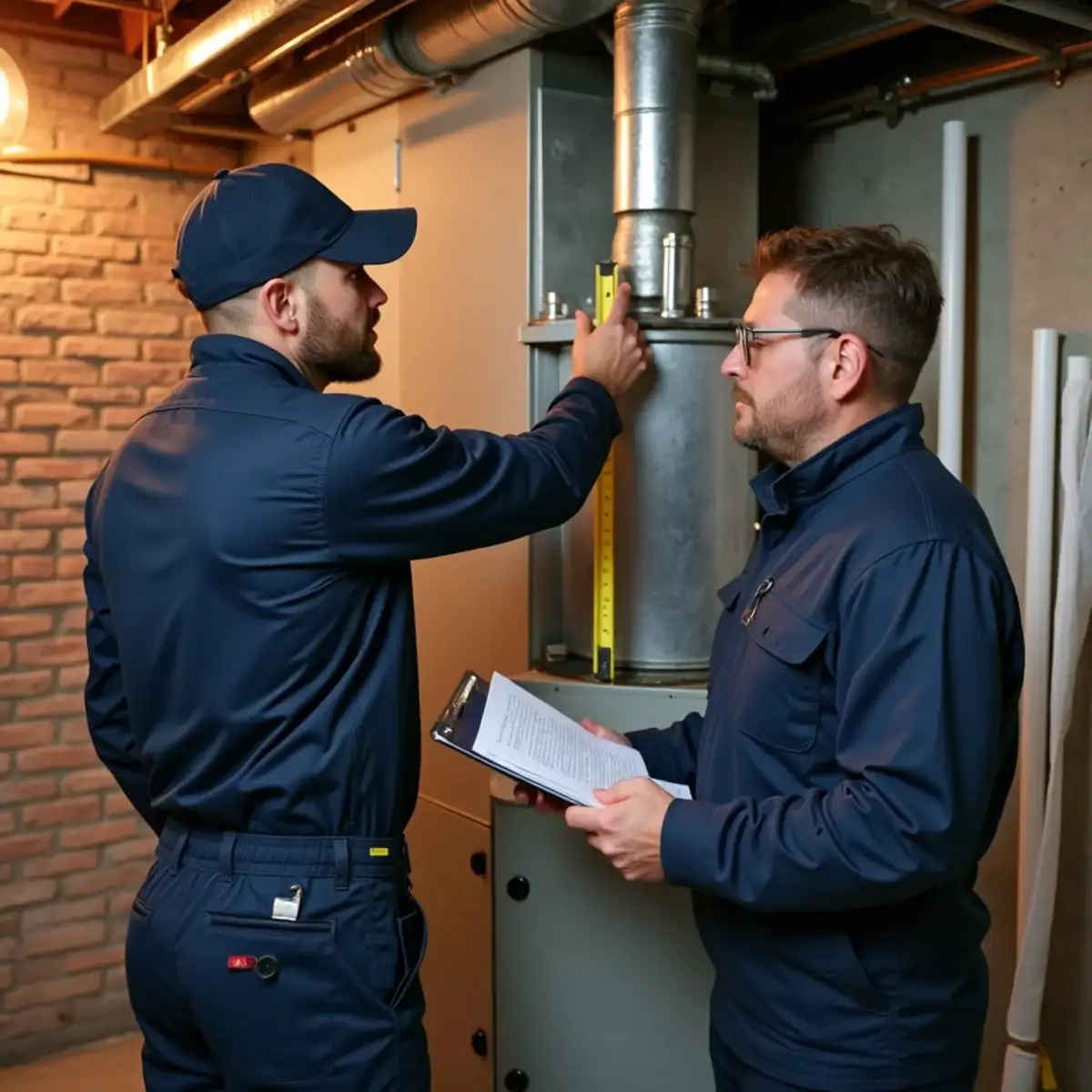
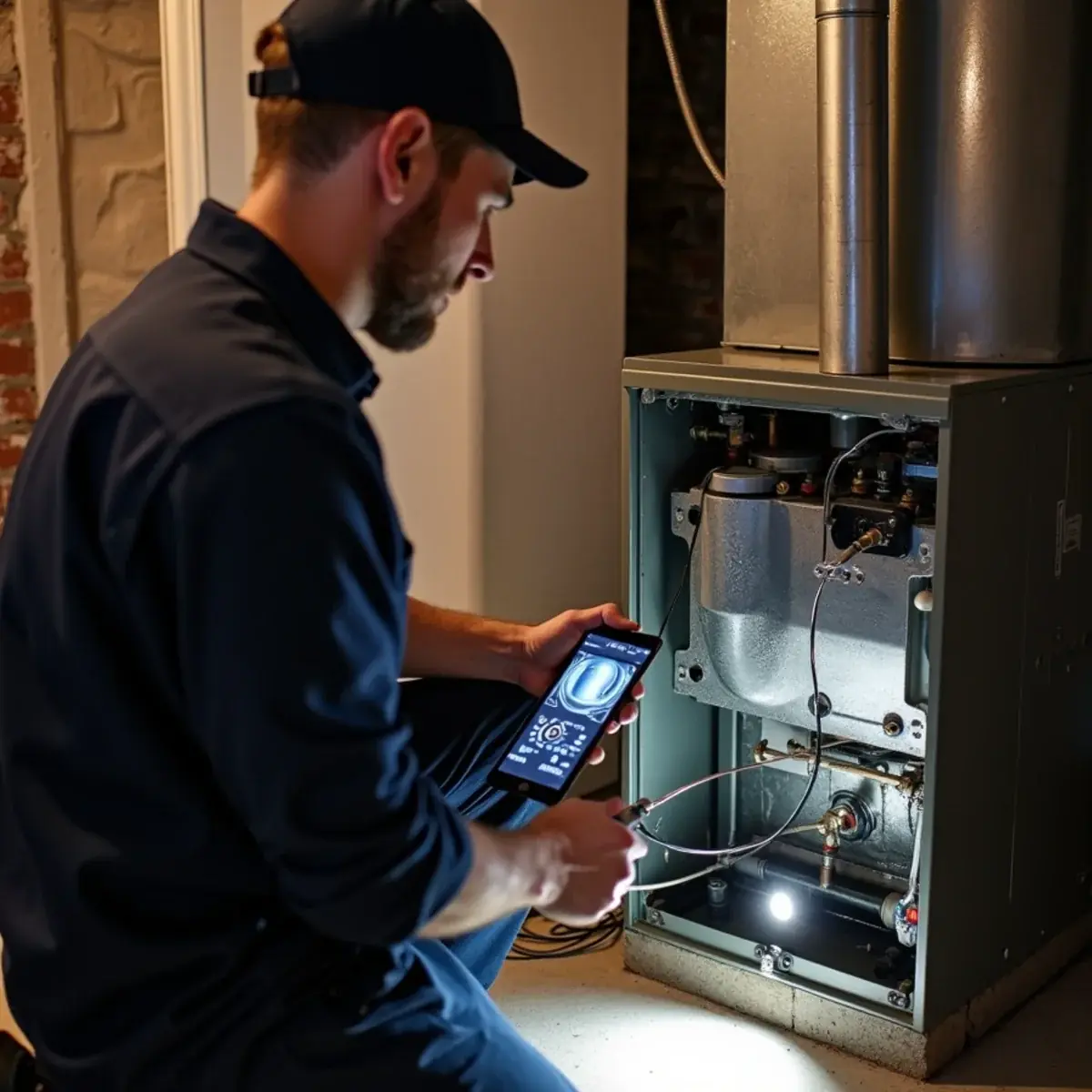
A cracked heat exchanger is the most expensive verdict a furnace can get, and it is fair to ask for proof. A careful technician builds the case from several tests, not one glance with a flashlight. When you ask for a second opinion, this is what the inspection should include.
- Camera inspection: a borescope fed through the burner openings or flue collar to look at the cells, seams and crimps where cracks usually start. Ask to see the images.
- Combustion analysis: CO and oxygen measured in the flue with a calibrated analyzer. A sudden change in oxygen when the blower starts suggests air is crossing into the combustion side.
- CO in the supply air: readings taken in the supply plenum or at a register near the furnace. Any rise above the room baseline is a red flag.
- Flame behavior at blower start: if the burner flames lift, wave or roll when the blower comes on, air is getting through the heat exchanger.
Rust scale or a surface mark is not proof of a breach, and neither is CO from a dirty burner. A sound second opinion separates those cases from a true crack.
Repair or replacement: what is actually fixable
Plenty of red-tagged furnaces are repairable. A gas leak at a union, a rusted-through flue connector, a blocked chimney base or a sooted burner set can usually be corrected and the furnace returned to service the same week. A confirmed heat exchanger crack is a different decision.
When a heat exchanger replacement makes sense
If the furnace is fairly young and the part is still made, replacing the heat exchanger alone can be reasonable. The furnace is largely taken apart, so labor is a big share of the bill. A manufacturer's parts warranty may cover the part, so find your paperwork first.
When replacing the furnace is the better call
On a furnace past about 15 years old, with an out-of-production part or a history of repairs, the money usually goes further on a new unit. That is common in the 1950s and 1960s houses of the inner-ring suburbs, many of which are on a third furnace. See furnace replacement for sizing and venting choices, and our furnace replacement cost guide for what drives the price. Either way, the technician gives you a firm price before any work starts.
Getting the gas back on: repair, paperwork and relight
Restoring heat after a red tag has two parts: correcting the hazard, then bringing the gas service and the appliance back on in the right order. The technician handles the first part and documents what was done.
The second part depends on who placed the tag and on your gas utility's own process. Some tags allow a qualified technician to restore the appliance after the repair; others require the utility to come back, inspect and turn the gas on. Follow the instructions printed on your tag or notice, and call the utility to confirm what they need before you schedule anything. Our guide to a gas company red tag walks through the questions to ask.
Once gas is restored, the technician relights the furnace and verifies it: leak test on new connections, combustion analysis, draft check, a CO reading in the supply air and a full cycle with every safety control tested. Keep that record with your tag.
We cover the city and the surrounding service areas, including Penn Hills, Ross Township and Bethel Park. Every HVAC technician we send is licensed where Pennsylvania requires it, and insured.
What affects the cost of fixing a red-tagged furnace
The tag sets the scope, so the price depends on what it names. You get a firm price after the technician has confirmed the hazard and before any work starts. These are the things that move the number:
- What was tagged. Tightening or replacing a leaking union or flex connector is a small job. A heat exchanger or a full furnace replacement is the large end.
- Venting work. Clearing a blocked chimney base costs far less than a new chimney liner or a rebuilt PVC vent run.
- Parts and warranty. A heat exchanger still under the manufacturer's parts warranty may be covered, leaving labor; an older furnace usually isn't.
- The second opinion itself. A thorough inspection with a camera and combustion analyzer is a diagnostic visit, and you're told the charge before dispatch.
- Timing. A tag on a cold night may mean an after-hours visit, which can carry a different rate that you hear about up front.
Who pays for the repair?
The utility or technician who placed the tag identifies the hazard; fixing it is up to the owner of the furnace. Homeowners arrange and pay for the repair directly. If you rent, tell your landlord or property manager the same day, since the furnace usually belongs to them, and keep a copy of the tag. Our furnace replacement page covers what a new furnace involves if the tag leads there.
Carbon monoxide alarms: where they belong in a Pittsburgh home
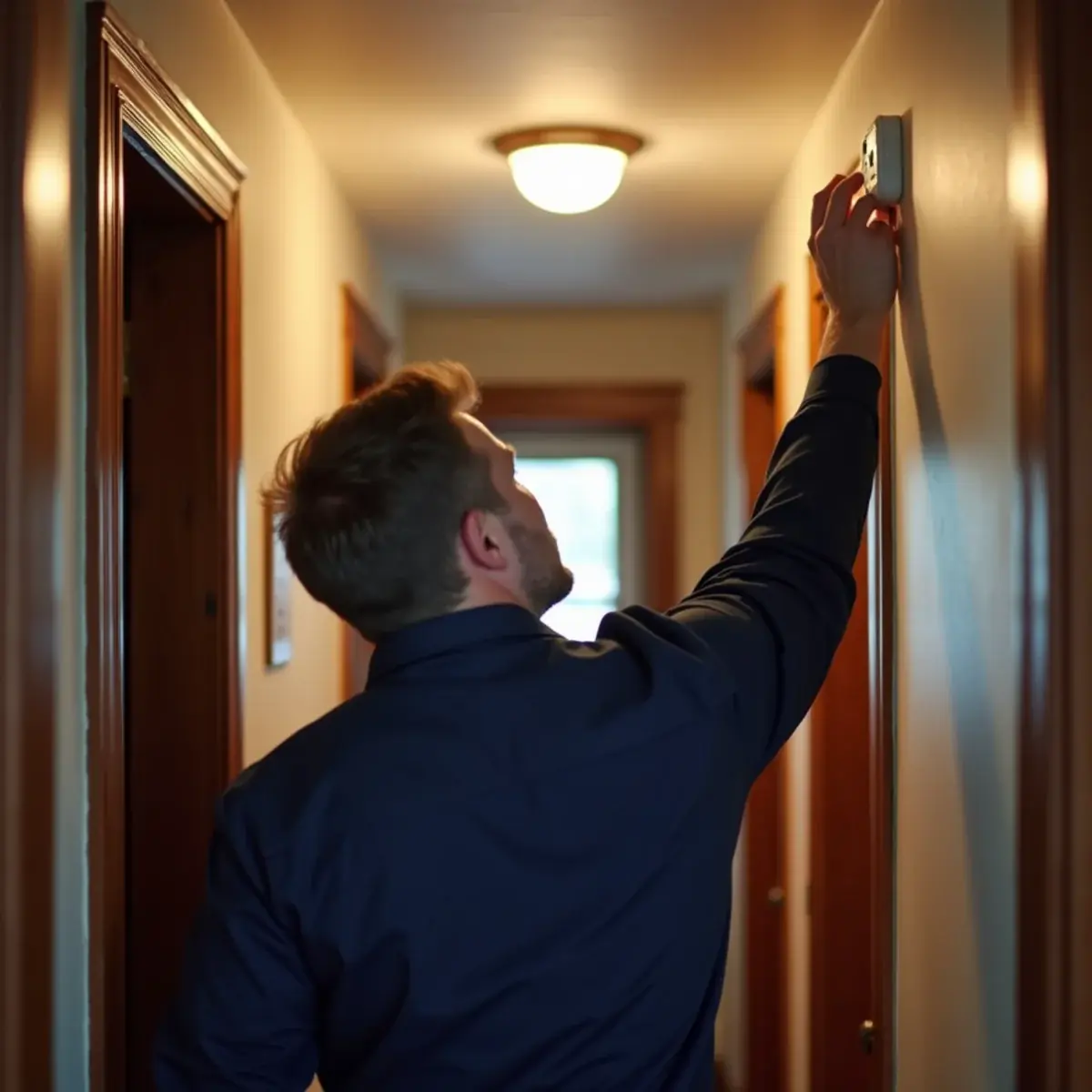
Working CO alarms are the backstop for the next time. In the typical Pittsburgh layout, with the furnace and water heater in the basement and bedrooms two floors up, one hallway alarm is not enough.
- One alarm outside each sleeping area, close enough to wake people.
- One on every level, including the basement near (but not right beside) the furnace and water heater.
- One in a room above an attached garage, common in split-levels and post-war ranches.
- Mount and test each alarm by the manufacturer's instructions, and replace units by the date printed on the back.
Alarms are a backup, not a substitute for a sound furnace. A yearly furnace tune-up and safety inspection with a combustion test catches most of the conditions that lead to a red tag before a utility crew ever sees them.
Why call us about a red-tagged furnace in Pittsburgh
A second opinion built on tests
Camera images of the heat exchanger, a combustion analysis and a carbon monoxide reading in the supply air, not a glance with a flashlight. Ask to see the images.
Repair when it's repairable
Many tagged furnaces need a connector, a flue pipe or a cleared chimney, not a new furnace. You hear which before any work starts.
A firm price before work
Diagnosis first, then the price for the repair or the replacement, so you can compare before you decide.
Answered 24/7
A tag on a January night is a no-heat emergency. The phone at (321) 478-0693 is answered around the clock.
Licensed where Pennsylvania requires it, and insured
Every HVAC technician we send is licensed where Pennsylvania requires it, and insured.
Red-Tagged Furnace around Pittsburgh
We send furnace technicians across the city and the surrounding suburbs. See how red-tagged furnace calls play out in these towns, or browse every furnace repair service area.
Also serving Mt. Lebanon, PA, Shaler Township, PA, McCandless, PA, Monroeville, PA.
Red-Tagged Furnace questions from Pittsburgh homeowners
Can I still run a furnace that has been red-tagged?
No. A red tag means the gas to the furnace was shut off because of a hazard, and running it before the problem is fixed can expose the household to carbon monoxide or a gas leak. Leave the tag and the valve alone. Call (321) 478-0693 to have a technician confirm the fault and price the repair, and follow the instructions on the tag or from your gas utility for getting service restored afterward.
Is a cracked heat exchanger always a full furnace replacement?
Not always. On a younger furnace with the part still in production, replacing only the heat exchanger can make sense, and the manufacturer's parts warranty may cover the part itself. On an older furnace, or when the part is discontinued, the labor involved usually makes a new furnace the better value. A technician should confirm the crack with a camera and combustion readings first, then give you a firm price for each option.
How quickly can a red-tagged furnace be repaired or replaced?
It depends on the cause. Simple repairs such as a leaking gas fitting, a rusted flue pipe or a dirty burner are often finished on the first visit once the price is agreed. A heat exchanger that has to be ordered, or a full furnace replacement, takes longer because of parts and, where required, permits. Restoring gas may also depend on your utility's schedule. Call (321) 478-0693 and we will dispatch a technician to assess it.
Who turns the gas back on after the repair?
That depends on who placed the tag and on your gas utility's process. In some cases a qualified technician can restore the appliance after correcting the hazard; in others the utility returns to inspect and turn the gas back on. Read the instructions on your tag or notice and call your utility, usually Peoples or Columbia Gas in Allegheny County, to confirm. The technician will relight and test the furnace once gas service is restored.
Does a red tag always mean carbon monoxide was found?
No. A red tag means someone found a condition they considered dangerous, and carbon monoxide is only one of them. Gas leaks, a cracked heat exchanger, failed or blocked venting and unsafe gas connections are all tagged too. The reason is written on the tag, so read it and keep a photo; the technician who repairs the furnace needs to see it.
Will the tag say how urgent the problem is?
Often it says what was found and whether the gas was shut off at the furnace or at the meter, and some tags or notices give a time frame for the repair. Wording differs between the gas utilities and HVAC companies, so read your tag and follow its instructions. If anything on it is unclear, call the utility before anyone relights the furnace.
Page reviewed by the Pittsburgh Furnace Repair team.