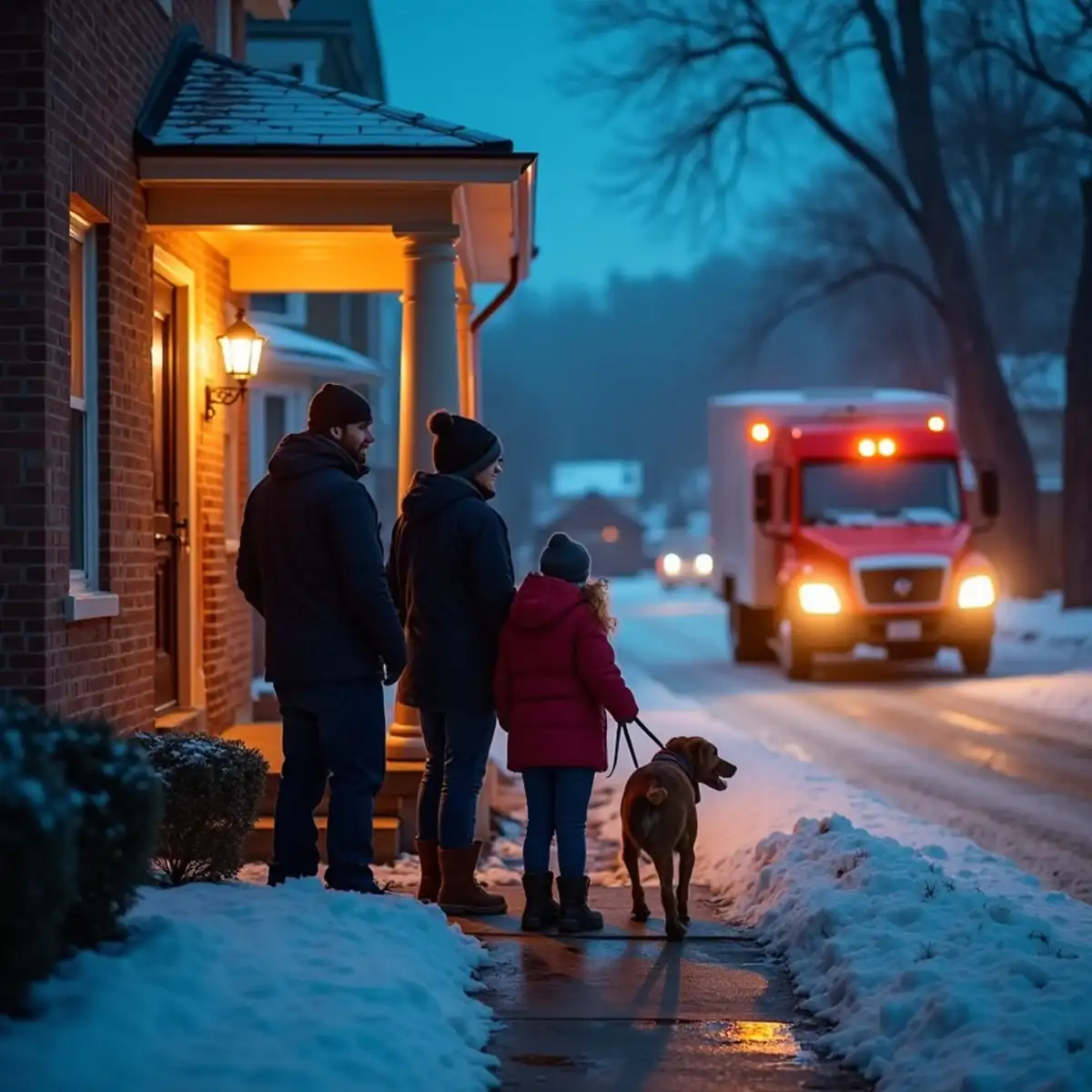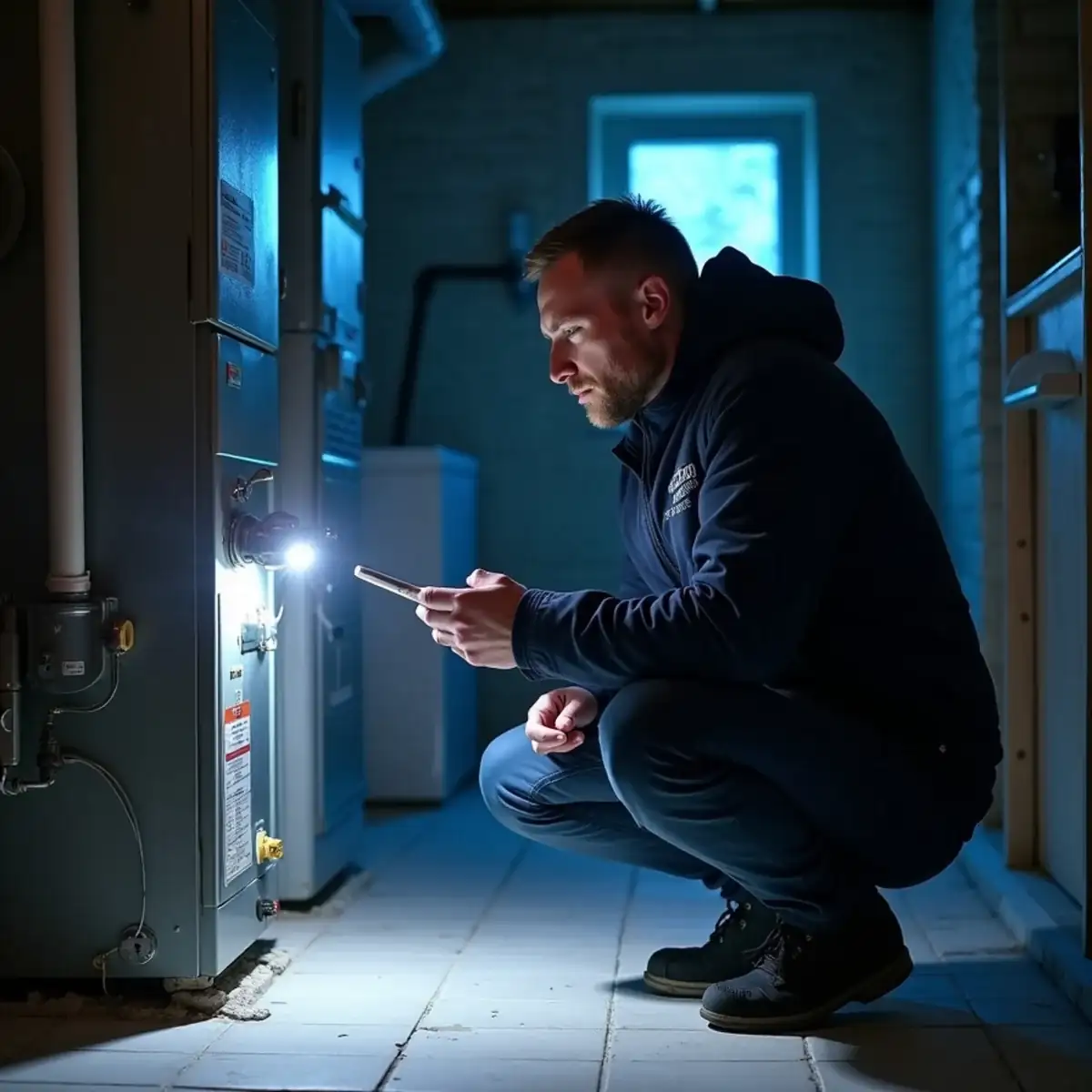
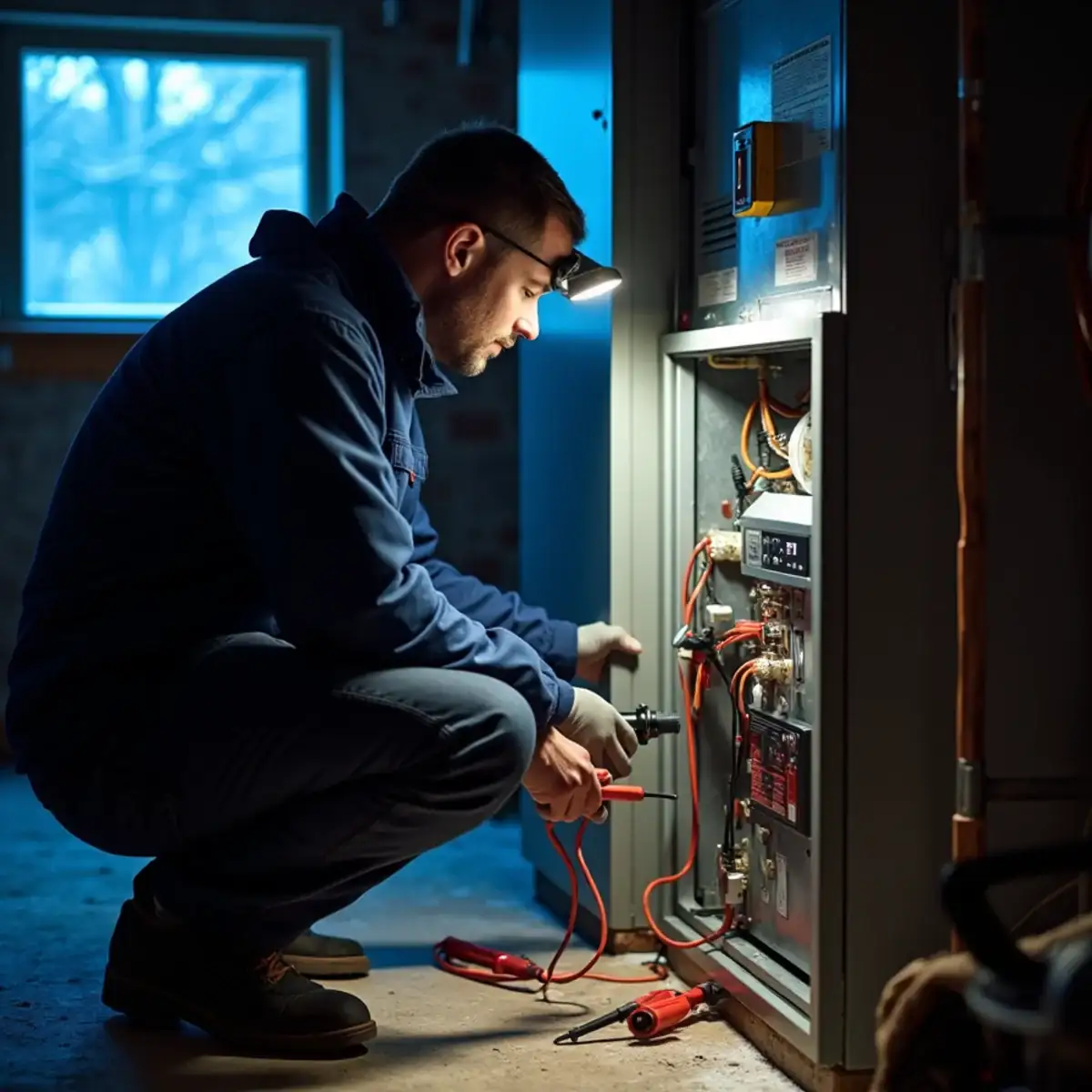
If your furnace has quit and the house is cooling fast, call (321) 478-0693 now; calls are answered 24 hours a day, including nights, weekends and holidays. We dispatch an independent local HVAC technician to gas forced-air furnaces across Pittsburgh and the surrounding suburbs. This is 24 hour furnace repair in the literal sense: after-hours, weekend and holiday calls go to the same line, and many are fixed the same day when the technician has the part on the truck.
In a Pittsburgh January, with lows in the low 20s and the odd arctic outbreak below zero, a dead furnace is more than discomfort. An older brick house can drop toward freezing within hours, and the water lines on outside walls freeze first. This page covers what counts as an emergency, how dispatch and after-hours pricing work, and how to protect the house while you wait.
What counts as a furnace emergency, and what can wait until morning
Not every furnace problem needs a technician at 3 a.m., and a night call may carry a different rate. Use this list to decide. If you are unsure, call and describe the symptoms; we will tell you honestly whether it can wait.
Furnace triage: call now, call 911 first, or wait for daytime
- Gas smell, sounding CO alarm, headache or nausea in the household
- What to do: Leave and call 911 or your gas utility from outside first
- No heat and outside temperatures below freezing
- What to do: Emergency: call now
- No heat with infants, elderly or ill people in the house
- What to do: Emergency: call now
- Burning or electrical smell, scorch marks, smoke from the furnace
- What to do: Turn off the furnace switch and call now
- Water pooling around a high-efficiency furnace and no heat
- What to do: Call now
- Furnace short cycling but the house is holding temperature
- What to do: Can usually wait for a daytime visit
- Noisy blower, weak airflow, uneven rooms, mild weather
- What to do: Can wait; book a daytime repair
Before calling, run through the quick furnace checks: thermostat mode and batteries, the furnace power switch, the breaker and a clogged filter. A surprising share of overnight calls end there.
Gas smell or a CO alarm: leave the house and call 911 or your gas utility first
A furnace technician cannot help you inside a house full of gas or carbon monoxide. The gas utility and the fire department have the meters, the authority to shut off service and the duty to respond, so they come first.
- Get everyone out. Leave the door open behind you only if it is quick.
- From outside, or a neighbor's house, call 911 or your gas utility's emergency line.
- Seek medical help for anyone with headache, dizziness, nausea, confusion or unusual sleepiness.
- Wait for the crew to clear the house. They may shut off and red-tag the furnace.
- Then call (321) 478-0693 for the repair. If the furnace was tagged, see red-tagged furnace repair.
Do not reset a CO alarm and go back to bed because it went quiet. Alarms stop when fresh air dilutes the gas, not when the source is gone. Our post on gas smells and CO alarms near the furnace explains the common causes, from a cracked heat exchanger to a blocked chimney flue.
Emergencies we handle: dead furnace in a freeze, burner and blower failures, tripped safeties, water around the furnace
Most after-hours calls fall into four groups. Technicians carry common parts such as hot surface ignitors, flame sensors, capacitors, pressure switches and limit switches, which is why many are fixed on the spot.
Dead furnace in a freeze
No power to the control board, a blown low-voltage fuse, a failed transformer or a board that will not start the sequence. See our no heat repair page for the full list of no-heat causes.
Burner and blower failures
The inducer runs but the burners never light, the flame lights and drops out after a few seconds, or the burners fire and the blower never starts. Blower and inducer faults are covered on the blower motor repair page.
Tripped safeties and water around the furnace
Rollout switches, high limits and pressure switches open for a reason, and a technician finds that reason before resetting anything. On a 90% or higher furnace, water on the floor usually means a frozen or clogged condensate drain, which also locks out the furnace. Water near the burners or controls means switch it off and call.
Before you call: one more check, the gas valve, and what to tell the dispatcher
Check the furnace door
If the furnace is completely silent, look at the lower blower door. Most furnaces have a door switch that cuts power whenever that panel isn't pushed in tight, and it often gets knocked loose after a filter change. Seat it firmly and give the thermostat a few minutes.
How to shut off the gas to the furnace, if you need to
When water is pooling around the furnace or the technician asks you to, you can turn off gas to the furnace alone at its shutoff valve, on the black pipe feeding the furnace. The handle is open when it runs parallel to the pipe and closed when it's turned a quarter turn across it. Turn the furnace off at its service switch too. Leave the main meter valve to the gas utility.
What to tell the dispatcher
- What the furnace is doing: silent, clicking, blowing cold, short-cycling, banging or leaking
- Any blinking light code on the control board, read through the sight glass in the door
- The furnace's age or model number, if the data plate is easy to see
- Who is in the house, especially infants, older adults or anyone with a medical condition affected by cold
- Whether the gas company has tagged the furnace, and whether there is any gas smell
How 24/7 dispatch works: live answer, nearest technician, price before work
- You call (321) 478-0693. A live person answers, day or night, and asks about the symptoms, the furnace type and who is in the house.
- We dispatch. The nearest available independent HVAC technician who covers your area is sent out. We do not promise an arrival time, because it depends on traffic, weather and how many calls are open.
- Diagnosis. The technician tests the ignition sequence, safeties, gas pressure and venting to find the actual fault.
- Price before work. You get a written or agreed price before any repair begins. You decide.
- Repair and test. After the repair, the furnace runs a full heating cycle, with a combustion check where the work calls for it.
Every HVAC technician we send is licensed where Pennsylvania requires it, and insured. Emergency calls are dispatched across the city and the surrounding service areas, from Penn Hills, Ross Township to Bethel Park.
Keeping the house and the pipes safe while you wait
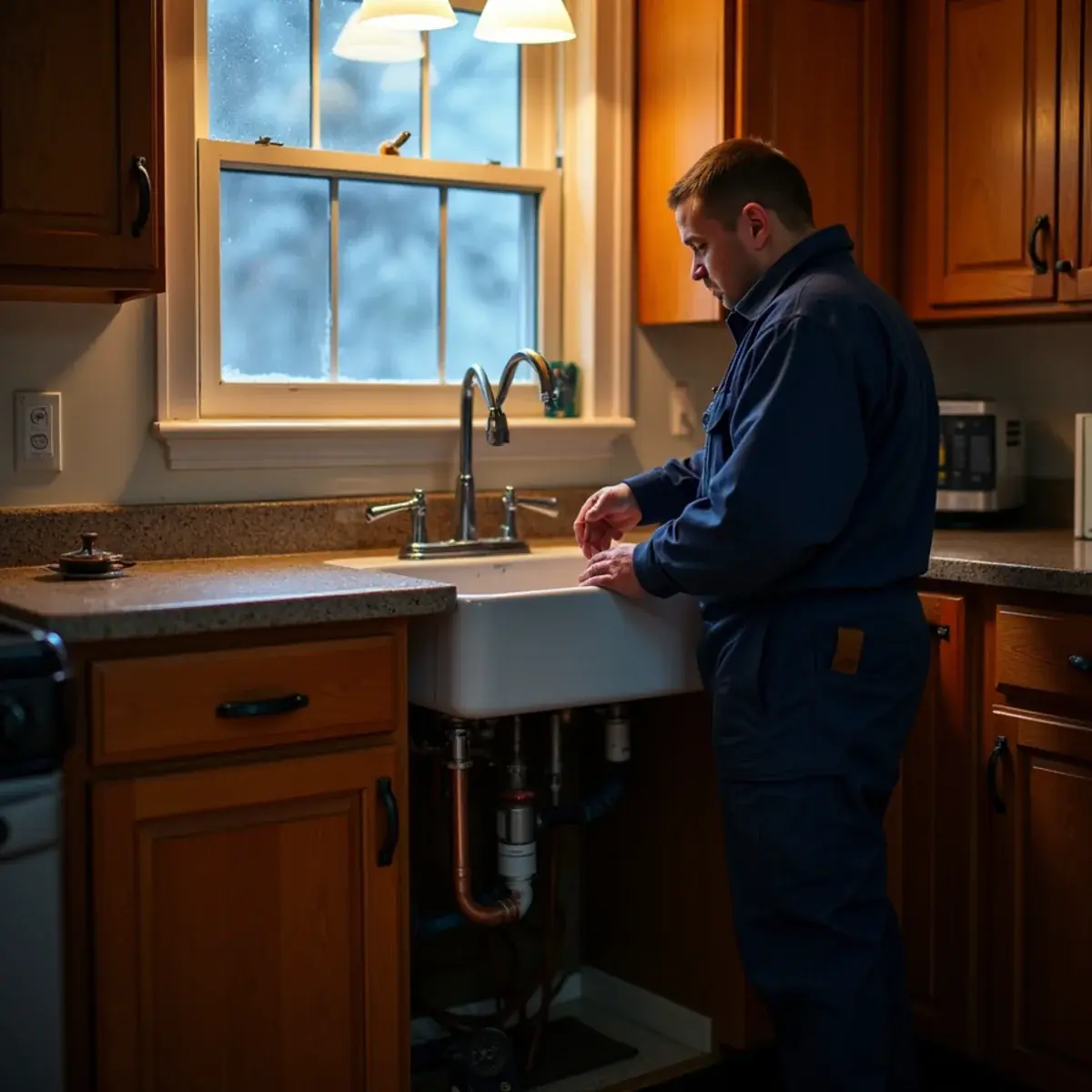
Pre-war Pittsburgh homes with thin plaster walls and kitchens on exterior walls lose heat fast. These steps buy time without adding risk.
- Open the cabinet doors under sinks on exterior walls so room air reaches the pipes.
- Let faucets on outside walls drip, hot and cold, so water keeps moving.
- Close doors to unused rooms and gather everyone into one or two rooms.
- Hang blankets over drafty doors and keep window coverings closed after dark.
- Use only space heaters listed for indoor use, plugged directly into a wall outlet, with three feet of clearance from anything that burns.
- Never heat with the oven, a gas range, a grill, a camp heater or a generator indoors or in an attached garage.
- Know where your main water shutoff is in case a pipe bursts.
Nights, weekends and holidays: how after-hours pricing works
Calls are answered around the clock, but labor at 2 a.m. or on Christmas Day is not the same as on a Tuesday afternoon. Independent technicians may charge a different rate for nights, weekends and holidays. The difference reflects a technician leaving home in the middle of the night, or moving the next day's scheduled jobs, to get your heat back.
You will not find that out on the invoice. When you call, ask whether an after-hours rate applies and you will be told before a technician is dispatched. At the house, the technician diagnoses the fault and gives you the full price for the repair before any work starts. If the problem can safely wait for regular hours, the technician will say so. Ask, too, whether there is a diagnostic or service-call fee and whether it is credited toward the repair. Pittsburgh-area HVAC companies publish regular-hours diagnostic fees at roughly $75 to $150; those are other companies' figures, not our rates.
What moves the price most is the part and the time involved: a flame sensor cleaning is a short job, while a control board, inducer motor or blower motor costs more. Our furnace repair cost guide explains the main cost drivers.
Help paying for an emergency repair
If your household meets the income limits, Pennsylvania's Low Income Home Energy Assistance Program includes crisis help for broken heating equipment, handled through your county assistance office. The rules and season dates change from year to year, so check the state's LIHEAP page or call the county office for current details.
Cold snaps in Pittsburgh: why call volume jumps and how to get seen sooner
The first hard freeze each fall and every stretch of single-digit nights bring a wave of calls at once. Furnaces that limped through mild weather run nonstop, weak ignitors and capacitors fail, and high-efficiency units lock out on frozen condensate lines and blocked PVC vents. Every furnace company in the region gets busy on the same night.
- Call early. If the furnace is struggling in the evening, call then rather than at midnight when it quits.
- Have the model number ready. It is on the data plate inside the furnace door and lets the technician bring likely parts.
- Describe the symptoms. Note the sounds, any blinking LED code on the board, and what happens when the thermostat calls for heat.
- Clear a path. Move stored boxes and laundry so the technician can reach the furnace, the filter and the vent pipes.
- Check outside vents. On a PVC-vented furnace, gently brush snow away from the pipes on the side wall.
Why call us for emergency furnace repair in Pittsburgh
A person answers, 24/7
Nights, weekends and holidays go to the same line, (321) 478-0693, and you talk to someone who asks about the furnace and the people in the house.
Safety triage first
If anything you describe sounds like gas or carbon monoxide, you'll be told to get out and call 911 or the gas utility before anything else.
Common parts on the truck
Hot surface ignitors, flame sensors, capacitors, pressure switches and limit switches cover a large share of no-heat calls, which is why many are fixed on the first visit.
Rates and price before work
Any after-hours rate is told to you before dispatch, and the repair price before any work starts.
Licensed where Pennsylvania requires it, and insured
Every HVAC technician we send is licensed where Pennsylvania requires it, and insured.
Emergency Furnace Repair around Pittsburgh
We send furnace technicians across the city and the surrounding suburbs. See how emergency furnace repair calls play out in these towns, or browse every furnace repair service area.
Also serving Mt. Lebanon, PA, Shaler Township, PA, McCandless, PA, Monroeville, PA.
Emergency Furnace Repair questions from Pittsburgh homeowners
Are you really answering furnace calls 24 hours a day?
Yes. Calls to (321) 478-0693 are answered 24 hours a day, seven days a week, including weekends and holidays. A live person takes the details and dispatches an independent local HVAC technician. We do not promise a specific arrival time, because it depends on weather, traffic and how many calls are open, but you will be told what to expect when you call.
Does emergency furnace repair cost more at night or on a holiday?
It can. Independent technicians may charge a different rate for nights, weekends and holidays. Ask when you call and you will be told whether an after-hours rate applies before anyone is dispatched. At your home, the technician diagnoses the problem and gives you the full repair price before any work begins, so nothing is added without your agreement.
Is it safe to use space heaters or the oven while I wait?
Space heaters are safe if they are listed for indoor use, plugged directly into a wall outlet and kept three feet from bedding, curtains and furniture. Never heat the house with a gas oven or range, a grill, a camp heater or a generator indoors; they can produce carbon monoxide. Close off unused rooms and open sink cabinets on outside walls to protect the pipes.
Can the furnace usually be repaired on the first visit?
Often, yes. Technicians carry common parts such as ignitors, flame sensors, capacitors, pressure switches and limit switches, which cover a large share of no-heat calls. A control board, blower motor, inducer or gas valve for a specific model may need to be ordered. If so, the technician will tell you and, where it is safe, may get the furnace running temporarily.
How do I shut off the gas to my furnace?
Only do it if there's no gas smell; if you smell gas, leave the house and call 911 or your gas utility from outside. Otherwise, find the shutoff valve on the black gas pipe running to the furnace. The handle is open when it lines up with the pipe and closed when you turn it a quarter turn across the pipe. Also switch the furnace off at its service switch. Leave the main valve at the meter to the gas company.
What if I can't afford an emergency furnace repair?
Ask for the price before any work starts; you're never committed until you agree. If your household meets the income limits, Pennsylvania's LIHEAP program offers crisis help for broken heating equipment through your county assistance office. Rules and dates change each season, so check the state's LIHEAP page or call the county office.
Page reviewed by the Pittsburgh Furnace Repair team.