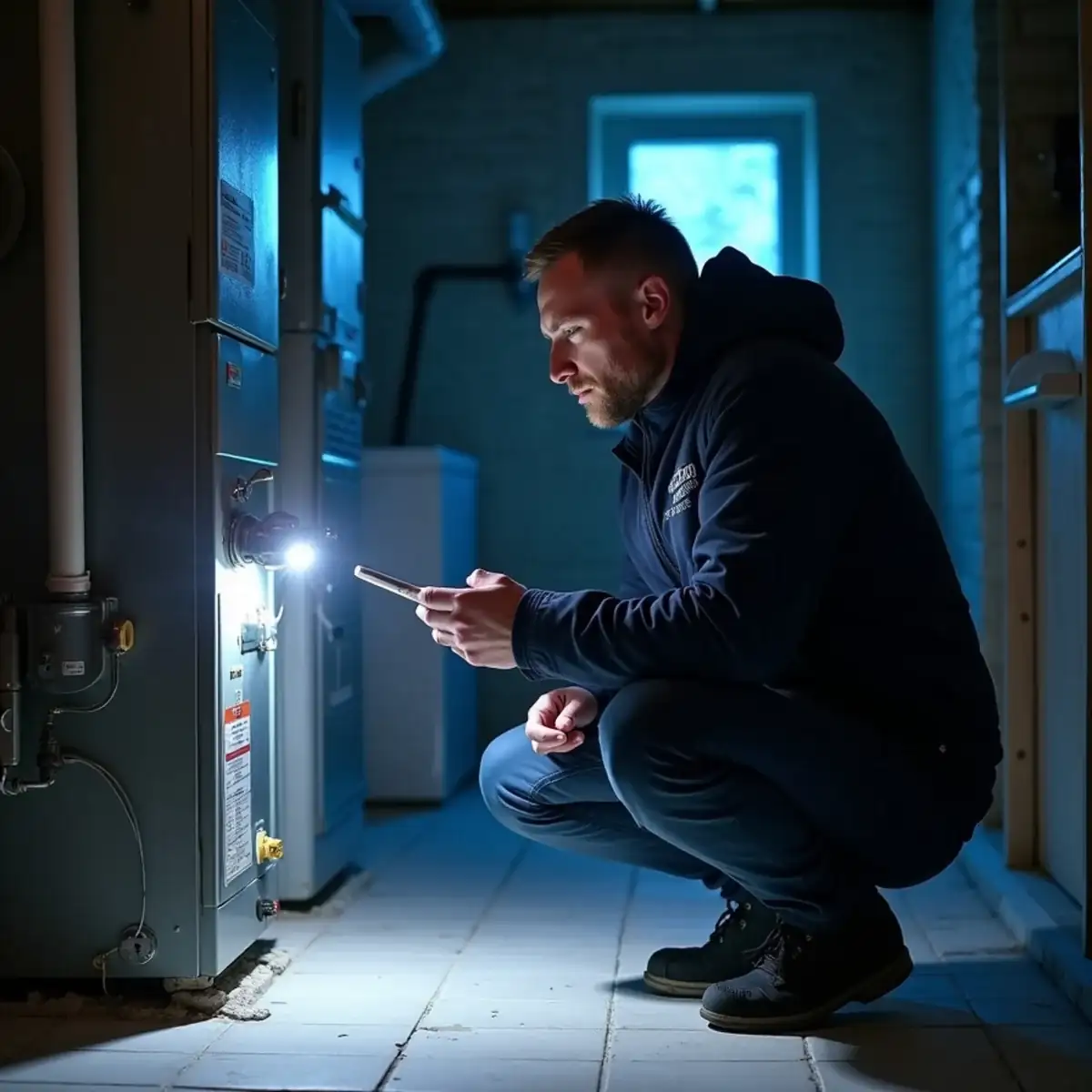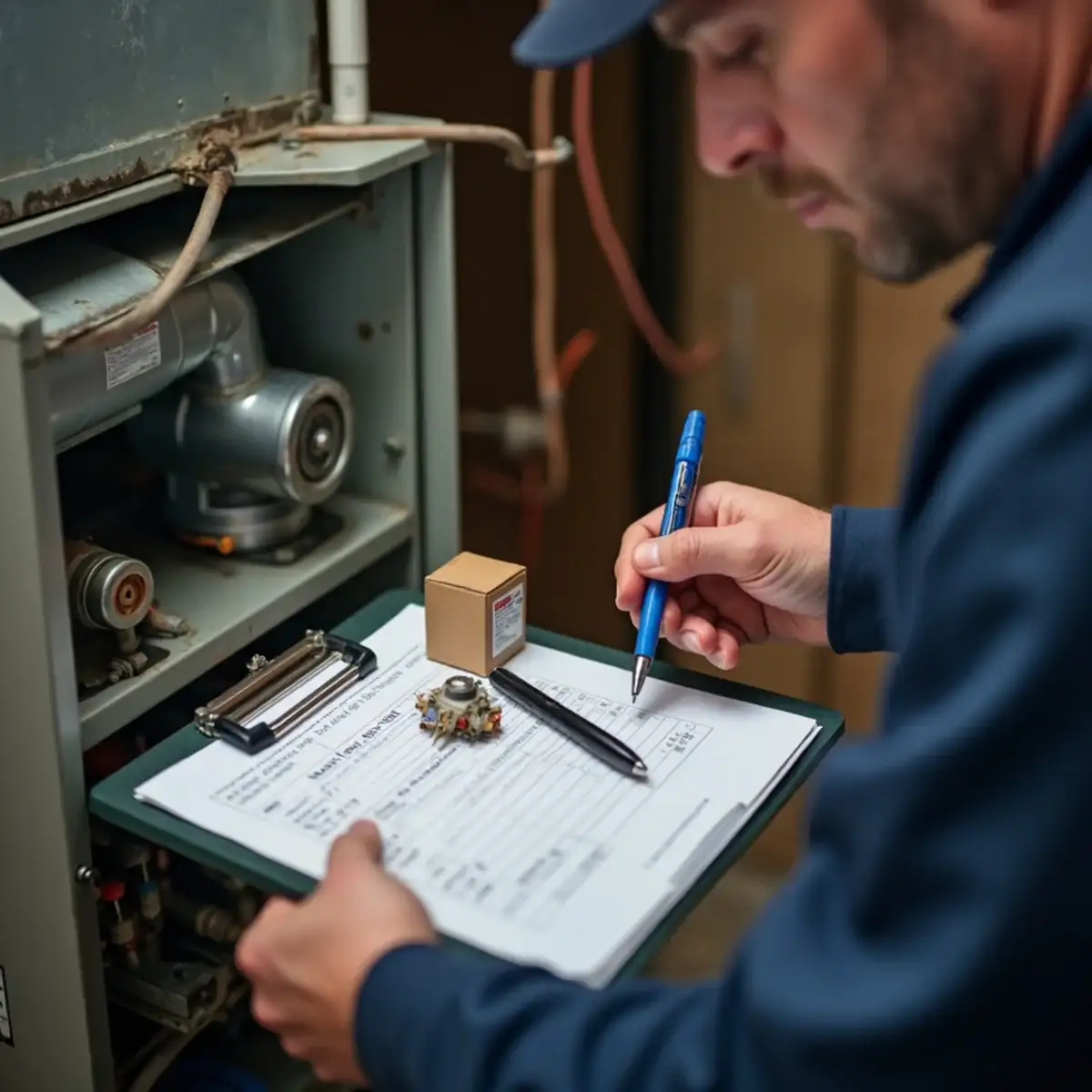
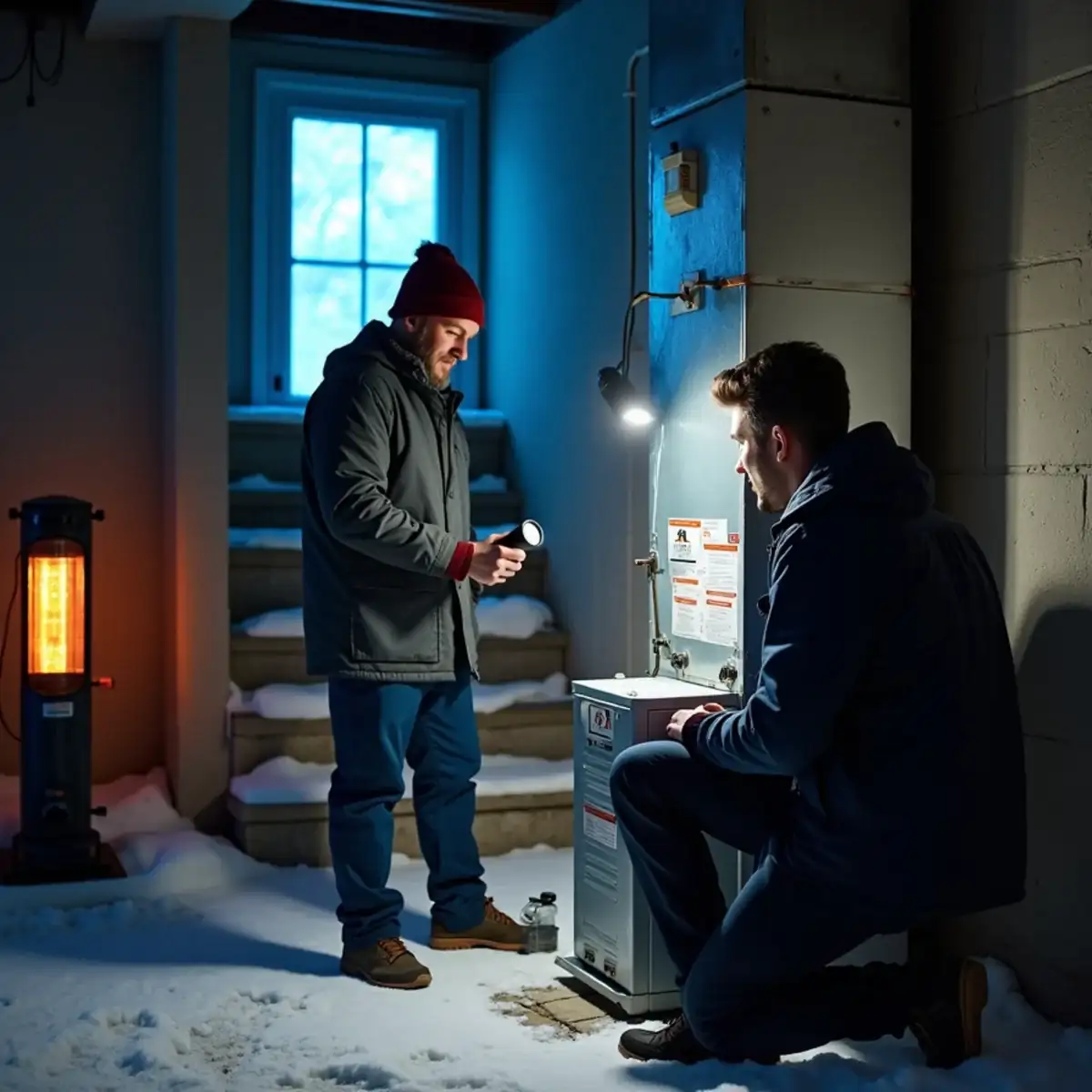
If your furnace has quit and the house is getting colder, call (321) 478-0693 and Pittsburgh Furnace Repair will dispatch a local furnace technician, day or night. Calls are answered 24 hours a day, 7 days a week, including January nights in the low 20s.
A gas furnace follows the same sequence every cycle: the thermostat calls, the inducer starts, a pressure switch proves the vent is clear, the ignitor glows, the gas valve opens and a flame sensor confirms the burners lit. When the heat stops, one link in that chain has failed. The technician's job is to find which one with meters, not guesses.
Most calls for no heat repair in Pittsburgh start with one of three complaints: the furnace won't turn on, it runs but blows cold air, or it clicks and never lights. Call it heating repair, heater repair or furnace repair, the visit works the same way: testing first, then a price.
Every HVAC technician we send is licensed where Pennsylvania requires it, and insured, and you get a price before any repair begins.
No heat right now? Five checks that take two minutes
Plenty of no-heat calls end at one of these five spots. None of them involve opening the burner compartment.
- Thermostat. Set to Heat, setpoint a few degrees above room temperature, screen lit. Dead batteries blank many thermostats.
- Furnace switch. Look for a light switch on a joist or by the basement stairs, often with a red cover plate. It gets flipped off by mistake.
- Filter. Slide it out. If it is gray and caked, replace it. A choked filter can trip the high-limit switch.
- Breaker. Reset a tripped furnace breaker once. If it trips again, leave it off and call.
- Gas valve. The handle on the furnace gas line should run parallel to the pipe. If other gas appliances also quit, call your gas utility about the supply.
Two more take seconds. Make sure the supply registers and return grilles are open and not buried under rugs or furniture, because a starved return can trip the high limit. Then check that the lower blower door on the furnace is pushed in tight. A door safety switch keeps the furnace completely dead if the panel is even slightly off, which happens after someone changes the filter.
Our guide to what to check when a furnace stops working covers these in more detail. If all five look right and the house is still cold, the fault is inside the furnace.
Why a gas furnace stops heating: the faults we find most in Pittsburgh basements
Many Pittsburgh furnaces sit in damp stone or block basements where humidity rusts burners and corrodes wire terminals, and they run nearly nonstop from October to April. The same handful of failures accounts for most no-heat calls.
| What you notice | Likely cause | What the technician tests |
|---|---|---|
| Inducer hums, ignitor never glows | Cracked hot surface ignitor | Ignitor resistance and voltage at the ignitor plug during trial for ignition |
| Burners light, then drop out in seconds | Dirty flame sensor or poor ground | Flame signal in microamps DC and the burner ground path |
| Inducer runs, nothing else happens | Pressure switch not closing | Inducer draw on a manometer, hose and condensate trap condition |
| Blower runs cold, burners off | High-limit or rollout switch open | Limit continuity, temperature rise and airflow |
| No lights on the control board | Power, door switch or blown fuse | 120-volt and 24-volt supply, board fuse, door interlock |
A fault code points to a circuit, not a part. A pressure switch code often means a blocked vent or a cracked hose rather than a bad switch, so the technician tests before replacing anything.
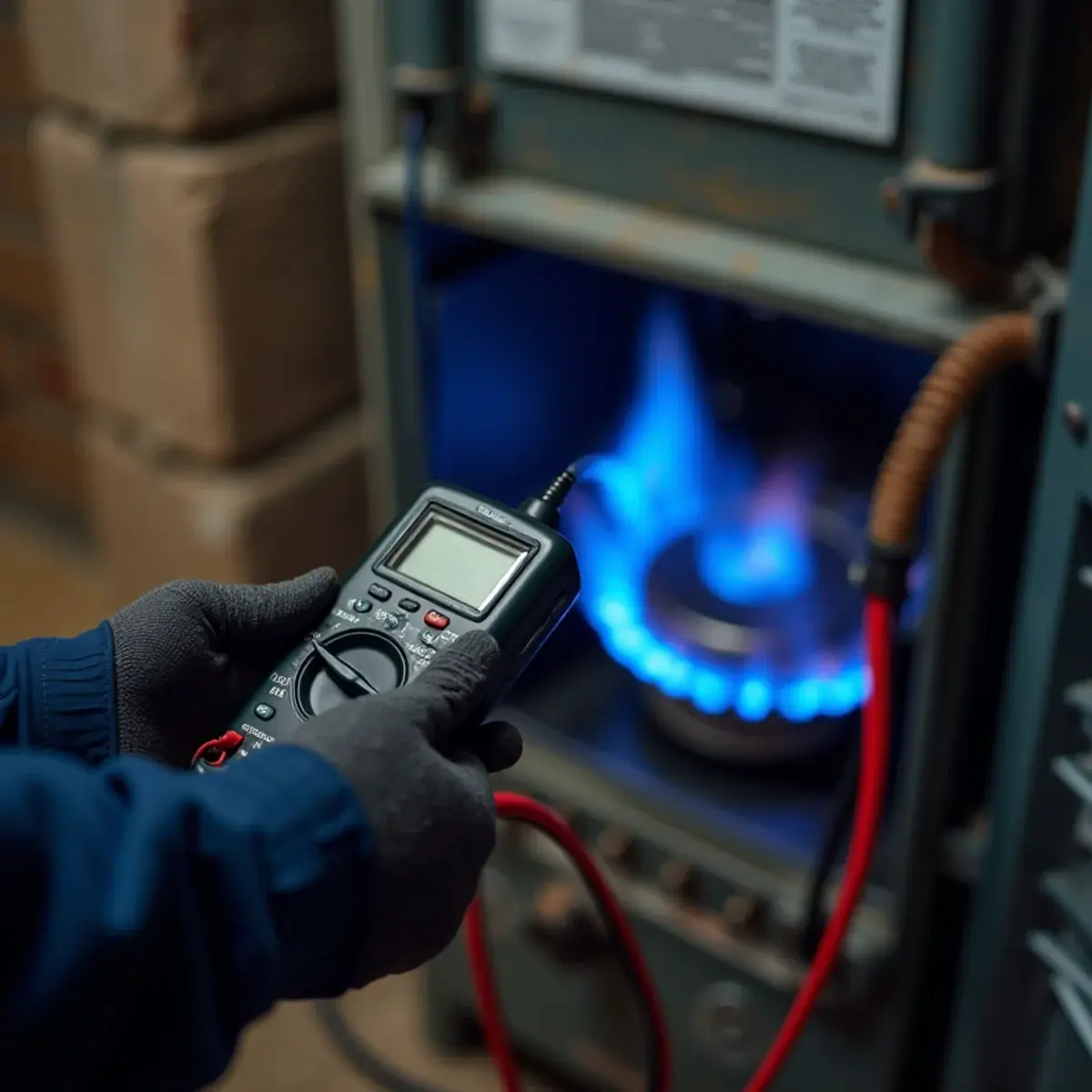
Furnace will not ignite: hot surface ignitors, flame sensors, pilots and gas valves
When the burners never light, or light and drop out, the fault sits in the ignition and flame-proving circuit. These parts are usually a same-visit fix when the part is on the truck.
Hot surface ignitors
Most furnaces built since the early 1990s light with a hot surface ignitor. Older flat silicon carbide ignitors are brittle and crack with age. Silicon nitride ignitors are far tougher and are often the better replacement. The technician checks the ignitor's resistance and the voltage the board delivers, since weak board output kills new ignitors. Ignitor replacement (you will also see it spelled igniter) is one of the most common no-heat repairs.
Flame sensors and flame rectification
The flame sensor is a metal rod in the burner flame. The board reads the tiny DC current the flame conducts through it, typically a few microamps. Oxidation, a cracked porcelain insulator or a poor ground lowers that signal and the board shuts the gas valve. A low reading after cleaning points to a ground or board problem.
Standing pilots and gas valves
Some older furnaces still use a standing pilot. If the pilot light is out and will not stay lit, the thermocouple or pilot assembly is the usual cause. When the ignitor glows and the flame circuit is good but no gas flows, the technician measures voltage at the gas valve and its outlet pressure before condemning it. See a furnace that clicks but will not ignite for more.
Furnace runs but blows cold air: limit switches, clogged filters and pressure switch lockouts
First, check that the thermostat fan is set to Auto, not On. With the fan on, air moves even when the burners are idle.
- High-limit switch tripped. When the heat exchanger overheats, the limit kills the burners and the blower keeps running. Restricted airflow from a dirty filter, closed registers or a weak blower is the usual cause. Repeated trips show up as short cycling: the burners run a few minutes, shut off and start again.
- Rollout switch tripped. It opens if flame rolls out of the burner area. Most need a manual reset, and a trip is a warning about a blocked flue or heat exchanger.
- Pressure switch lockout. If the inducer cannot prove draft, the board quits after a few trials and may lock out for an hour.
The technician measures temperature rise, supply air minus return air, and compares it with the range on the furnace data plate. A rise above that range confirms an airflow problem. If the blower itself is failing, see furnace blower motor repair. The blog also covers why a furnace blows cold air cause by cause.
Two clues worth noting before you call: the blinking light and the cold rooms
Write down the blinking light code
Most furnaces built in the last 25 years have a small LED on the control board that flashes a code when the furnace shuts itself down. You can usually see it through a sight glass in the lower door without removing anything. Count the flashes, note whether the light is steady, fast or slow, and photograph the code chart printed on the label inside the door. The code tells the technician which circuit tripped, which narrows the diagnosis before anything is opened. Cutting the power to the furnace often clears the code, so read it first.
Why only some rooms are cold
When the furnace runs and some rooms heat while others stay cold, the burners are usually fine and the problem is air delivery. The common causes in Pittsburgh houses are closed or blocked registers, a dirty filter, a weak blower, a single undersized return in a house that had ducts added after it was built, and disconnected duct joints in the basement ceiling. Second floors in tall brick houses run cold for the same reason. Those are airflow faults, covered on our furnace blower motor repair page, and a technician confirms them with a static pressure and temperature rise reading.
High-efficiency furnaces: frozen condensate drains and blocked PVC vents in a cold snap
A 90% or 95% furnace pulls so much heat from its exhaust that water condenses inside it and drains through a trap to a floor drain or condensate pump. When an arctic outbreak drops Pittsburgh below zero, a drain line along a cold rim joist can freeze. Water backs into the trap, the pressure switch opens and the furnace shuts down.
The PVC intake and exhaust pipes on the side of the house cause the rest. Drifted snow, ice from the exhaust plume or an old bird nest can block a termination, and the furnace refuses to run.
- Clear snow from the two white PVC pipes outside, gently and by hand.
- Look for a frozen or kinked drain line at the furnace or condensate pump.
- Make sure the condensate pump is plugged in and not full.
- Call if the furnace still locks out. The trap, switch hose or vent slope may need work.
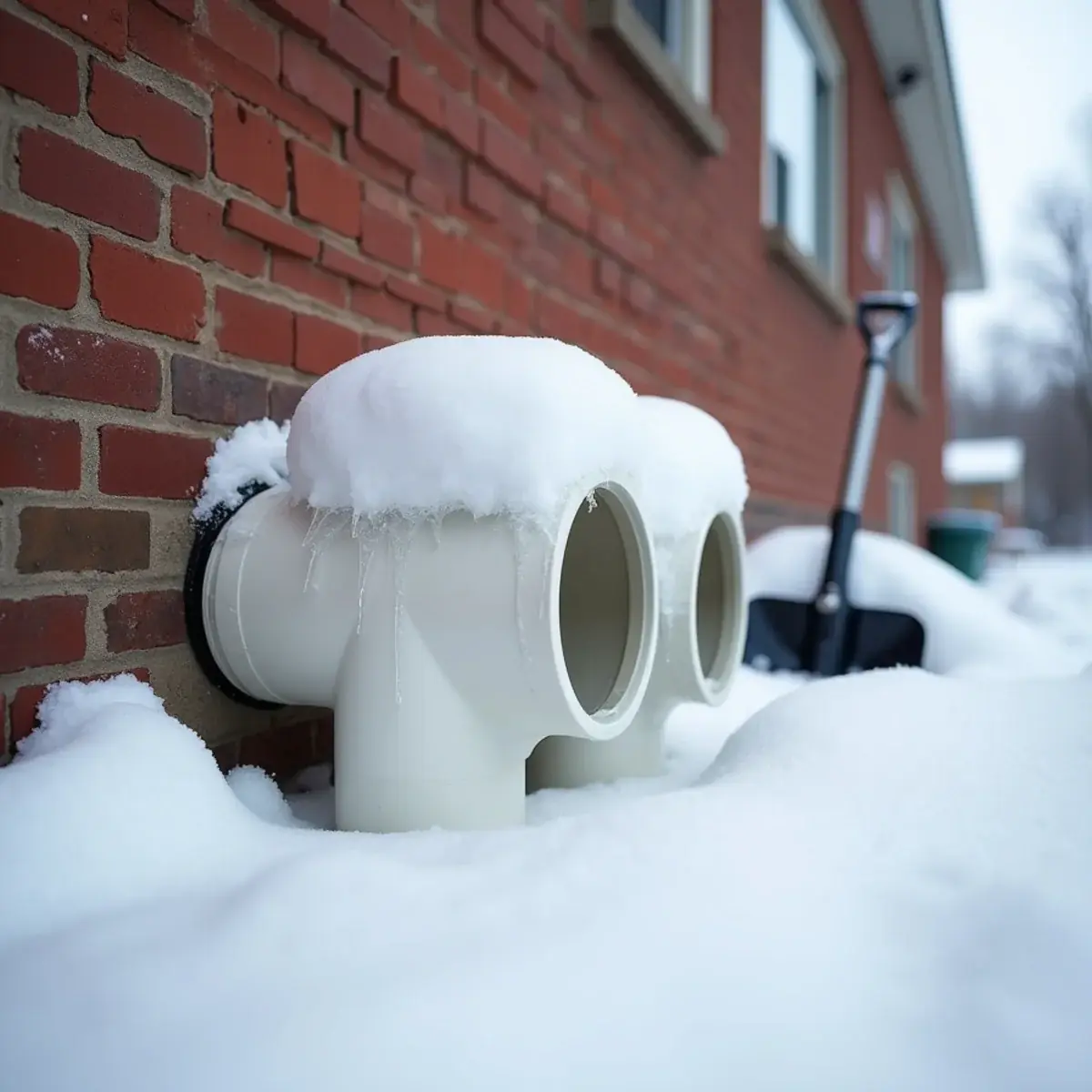
Read about frozen condensate in high-efficiency furnaces to prevent a repeat.
Older furnaces venting into brick chimneys: draft and liner problems
Most 80% furnaces in Pittsburgh vent through a metal flue pipe into an old brick chimney, often shared with the water heater. Those chimneys were built for coal or much hotter equipment. Cooler modern exhaust condenses inside unlined clay tile, washes out mortar and drops debris that chokes the draft.
Poor draft shows up as a pressure switch that will not close, a tripped rollout switch or exhaust spilling at the water heater's draft hood. The technician checks draft, looks for soot and rust at the flue connection and opens the chimney cleanout. Sometimes the fix is clearing a blockage. Sometimes the chimney needs a sized metal liner, or it is time to plan furnace replacement. In a tight or finished basement the technician also checks for enough combustion air, because a furnace starved of air drafts poorly even with a clear chimney.
We see this often in the post-war ranches of Penn Hills, the 1950s and 1960s homes across Ross Township and the split-levels of Bethel Park, where furnace and water heater often share one interior chimney. If the gas utility has already tagged the furnace, see red-tagged furnace repair.
What a no-heat visit looks like: diagnosis, price before work, repair
When you call, we take your address and what the furnace is doing, then dispatch a local technician from across our Pittsburgh service areas. On site, the visit follows a set order.
- Safety check. Gas odor and carbon monoxide at the furnace and flue come before anything else.
- Fault history. The board's code and the symptoms you saw narrow the search.
- Run the sequence. The technician calls for heat and watches each step with meters on the suspect parts.
- Explain and price. You hear what failed and why, with a price before any work starts.
- Repair and verify. After you approve, the part is replaced and the furnace runs several full cycles while temperature rise and flame signal are rechecked.
- Paperwork. The invoice lists the diagnosis, the part installed, the price and the warranty terms on parts and labor, plus anything unsafe the technician found that you chose not to fix.
At 2 a.m. in a cold snap the process is the same. Our emergency furnace repair page explains after-hours dispatch.
What affects the cost of a no-heat repair
We do not post a price list, because two calls with the same symptom can need very different work. The technician gives you a firm price on site before any repair begins, and you decide whether to go ahead.
- The failed part. A flame sensor cleaning or an ignitor is a small job. A control board, inducer or gas valve costs more.
- Furnace age and brand. Universal parts ride on the truck. A discontinued board for an older unit may mean a supply house run or a second visit.
- Access. A furnace wedged under the basement stairs takes longer to work on safely.
- Timing. Nights, weekends and holidays can carry different rates, built into the price you approve before work starts.
- Related work. A frozen drain that needs rerouting or a chimney that needs a liner turns a part swap into a bigger job.
- The diagnostic visit. Ask whether a diagnostic or service-call fee applies and whether it is credited toward the repair. You hear it before a technician is dispatched.
For context, Pittsburgh-area HVAC companies publish common furnace repairs at roughly $150 to $600 and diagnostic visits at roughly $75 to $150. Those are other companies' figures, not our price list, so use them to judge whether a quote is in the normal range.
Our guide to furnace repair cost in Pittsburgh goes deeper on what drives the number.
Why call us for no heat repair in Pittsburgh
A no-heat call is the call we're built for. Here's what you can count on when you phone us with a cold house.
Answered 24/7, including the coldest nights
A person picks up (321) 478-0693 at any hour, so a furnace that quits at 2 a.m. in January doesn't have to wait for business hours.
Testing before parts
Technicians follow the ignition sequence with meters: flame-sensor microamps, pressure switch readings, temperature rise. You pay for the part that failed, not a guess.
A price before any repair
The technician explains what failed and why, then gives you the price. Nothing is repaired until you agree.
Gas furnaces only
Every technician we send works on gas forced-air furnaces every day, from hot surface ignitors and inducers to the condensate traps on high-efficiency units.
Licensed where Pennsylvania requires it, and insured
Every HVAC technician we send is licensed where Pennsylvania requires it, and insured.
No Heat Repair around Pittsburgh
We send furnace technicians across the city and the surrounding suburbs. See how no heat repair calls play out in these towns, or browse every furnace repair service area.
Also serving Mt. Lebanon, PA, Shaler Township, PA, McCandless, PA, Monroeville, PA.
No Heat Repair questions from Pittsburgh homeowners
How fast can a technician reach my home in Pittsburgh when the heat is out?
It depends on your location, the roads and how many calls are coming in, so we do not promise a fixed arrival time. Calls are answered 24/7 and the nearest available local technician is dispatched. Ask for the current arrival estimate when you call. During an arctic cold snap, call volume jumps across Allegheny County, so calling as soon as the heat stops, rather than waiting to see if it comes back, gets you into the queue sooner.
Is it safe to keep resetting a furnace that will not stay lit?
No. One reset is reasonable, but repeated resets are not. A lockout means a safety control has flagged a weak flame signal, a blocked vent or overheating. Resetting again and again can run the furnace with a venting problem or push unburned gas through the heat exchanger. A tripped rollout switch in particular should not be reset more than once before a technician checks the flue and heat exchanger.
Will my pipes freeze if the furnace is off overnight?
They can, especially pipes in exterior walls, over unheated garages, in crawl spaces or along drafty basement rim joists, all common in older Pittsburgh houses. On a night in the low 20s or colder, a house loses heat fast. Open sink cabinets on outside walls, let faucets drip and close off unused rooms. Never heat the house with a gas oven or a grill. Call early so the furnace runs again before the coldest hours.
Do you repair every furnace brand, including older units?
Yes. The technicians we send work on gas forced-air furnaces generally rather than one brand, including older units still running in Pittsburgh basements. Ignitors, flame sensors, capacitors, limit switches and many motors come as universal parts. The real limit on very old furnaces is brand-specific parts such as control boards and inducer assemblies. If one is discontinued, the technician explains the substitutes and whether the repair still makes sense at that age.
Should I relight the pilot light myself?
Only if your furnace has a standing pilot, the instructions are printed on the furnace, and there is no gas smell. If you smell gas at all, leave the house and call 911 or your gas utility from outside. If the pilot lights and goes out again, stop: that usually points to a worn thermocouple or a dirty pilot assembly, and repeated relighting won't fix it. Most furnaces built since the 1990s have no pilot to relight.
Is it normal for the furnace fan to run when there is no heat?
Only if the thermostat fan is set to On, which runs the blower nonstop. Switch it to Auto. If the fan runs on Auto and the air is cold, the burners have shut down, often on a high-limit or pressure switch trip, and the blower keeps running to cool the furnace. That's a no-heat call, not a fan problem.
Page reviewed by the Pittsburgh Furnace Repair team.