Gas furnaces typically last 15 to 20 years, and many post-war houses around Pittsburgh are now on their third or fourth one. When yours is near that age and the repair calls are stacking up, a replacement done properly can heat the house more evenly, burn less gas and remove the worry about an aging heat exchanger.
Doing it properly is the hard part. Pittsburgh houses add complications a new-construction install never sees: brick chimneys that may need a liner, basements with no easy path for PVC venting, and ductwork retrofitted into homes built long before forced air. Pittsburgh Furnace Repair sends local technicians who plan for those details before the old furnace comes out.
Below is how furnace installation in Pittsburgh works when it is done right: the signs it is time, the 80% vs 95% choice, sizing, installation day and what drives the cost of a new furnace.
Every HVAC technician we send is licensed where Pennsylvania requires it, and insured. You get a written price for the full scope before any work starts, and calls are answered 24/7 at (321) 478-0693.
Signs a furnace is at the end of its life
Age alone does not condemn a furnace, but age plus a pattern usually does. These are the signs technicians look for when a homeowner asks whether it is time.
- Age past 15 years with the original heat exchanger and a growing list of replaced parts.
- Repeat failures of the same kind, such as a second inducer or a third control board.
- Rust and scale on the burners, heat exchanger or cabinet floor, common in damp Pittsburgh basements.
- Soot, scorching or a lazy yellow flame around the burner area, which can point to combustion or venting trouble.
- Uneven heat and rising gas bills even though the thermostat settings have not changed.
- Discontinued parts, where a board or motor has to be hunted down or adapted from another model.
Repair or replace: age, repair history and heat exchanger condition
Three facts drive the decision more than anything a salesperson says. A good technician will put all three on the table and let you choose.
Age
A ten-year-old furnace with a failed ignitor is a repair. A twenty-year-old furnace needing an inducer assembly or a control board is a closer call, because the next failure is never far behind.
Repair history
Add up what has been spent in the last two or three seasons. When a single repair approaches a large share of the price of a new furnace on a unit past 15 years, most owners are better off putting that money toward replacement.
Heat exchanger condition
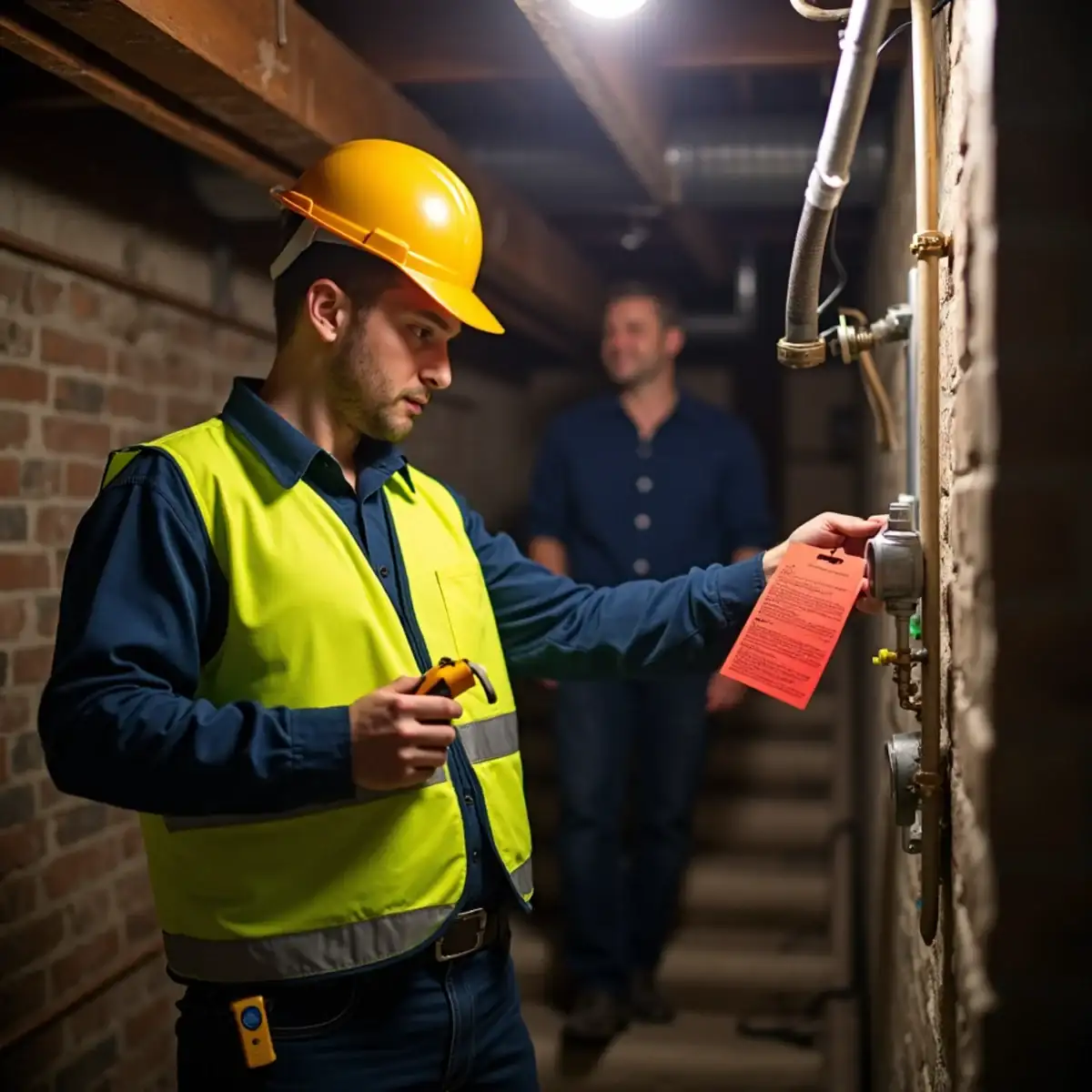
A cracked or rusted-through heat exchanger can let combustion gases into the airstream. The technician inspects it with a light and camera, watches for flame disturbance when the blower starts, and measures carbon monoxide in the flue and supply air. A confirmed crack on an older furnace almost always means replacement. If the gas utility has already shut the furnace down, our red-tagged furnace page and the post on what happens after the gas company red-tags a furnace explain the next steps. Our post on whether to repair or replace an old furnace works through the numbers.
The heat exchanger is also the most expensive part inside a furnace. Replacing one means taking the furnace nearly apart, so on a unit past 15 years the labor alone often makes a new furnace the better use of the money, even when the part is still covered by a manufacturer's warranty.
80% vs 95%+ furnaces: venting, chimney liners and condensate drains in older Pittsburgh basements
AFUE is the share of the gas you buy that ends up as heat in the house. The efficiency choice also decides how the furnace vents, and in an older Pittsburgh basement that is often the bigger question.
| 80% AFUE furnace | 95%+ AFUE furnace | |
|---|---|---|
| Venting | Metal B-vent or a lined masonry chimney | Sealed PVC intake and exhaust, usually through a sidewall |
| Chimney | Often needs a sized stainless or aluminum liner | Not used by the furnace |
| Condensate | None in normal operation | Trap and drain to a floor drain or condensate pump |
| Combustion air | Drawn from the basement | Piped in from outdoors |
| Main install question | Is the chimney safe and sized right? | Is there a clean route for PVC and a drain? |
One detail catches many homeowners. When a furnace moves to direct PVC venting, the gas water heater is left alone in a chimney sized for two appliances. That orphaned water heater often cannot draft properly in an oversized, cold flue and usually needs its own liner. A proper quote accounts for it.
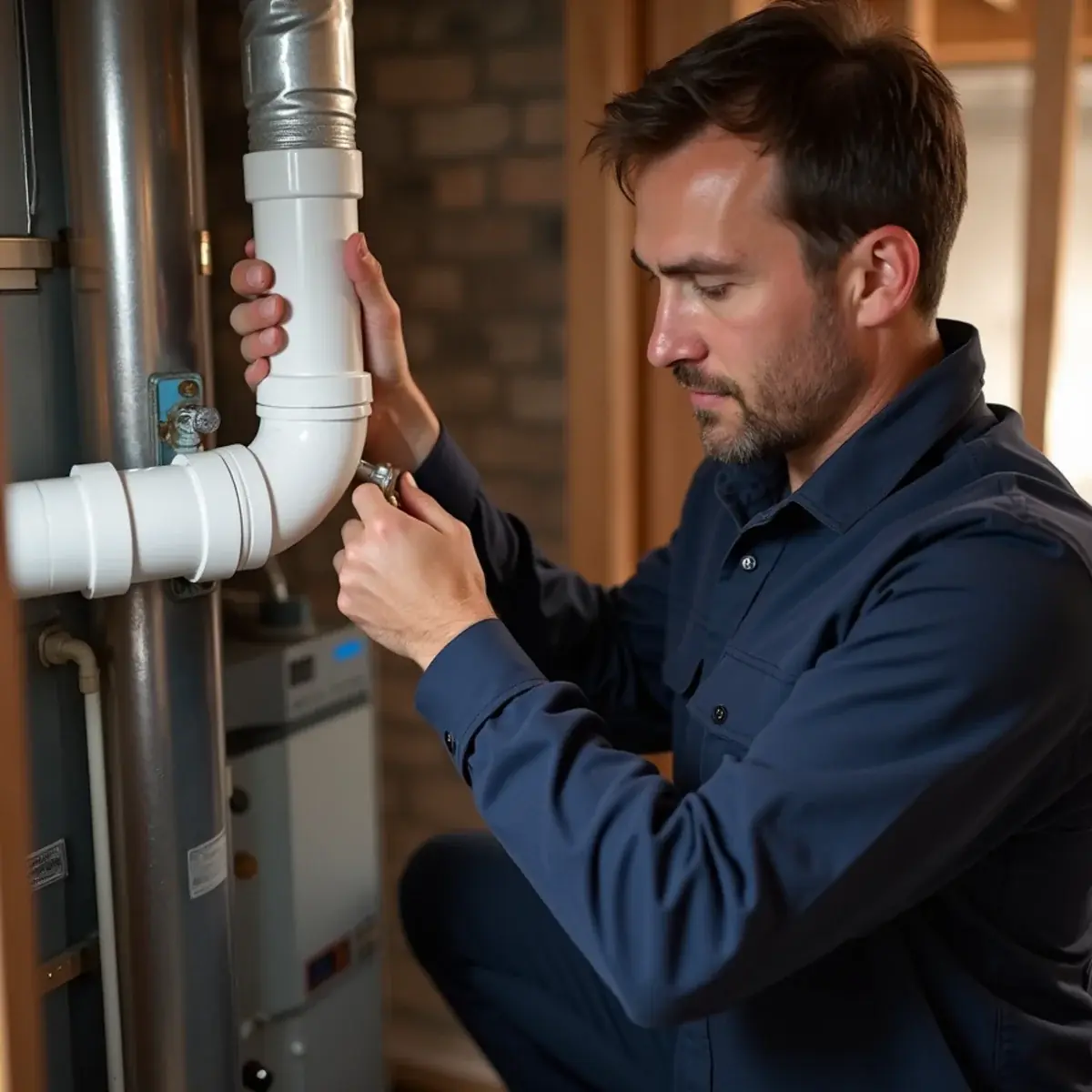
Condensate is the other half. A 95% furnace needs a drain path that will not freeze, and the PVC terminations need clearance from windows, the gas meter and the winter snow line.
Sizing a furnace for a brick Pittsburgh house (and why the old one was probably oversized)
Many furnaces coming out of Pittsburgh basements were sized by rule of thumb or simply matched to the unit before them. Since then, owners have added insulation, replacement windows and storm doors, which cut the heat loss. The result is a furnace far bigger than the house needs, which short-cycles, blasts hot air, then shuts off and leaves cold corners.
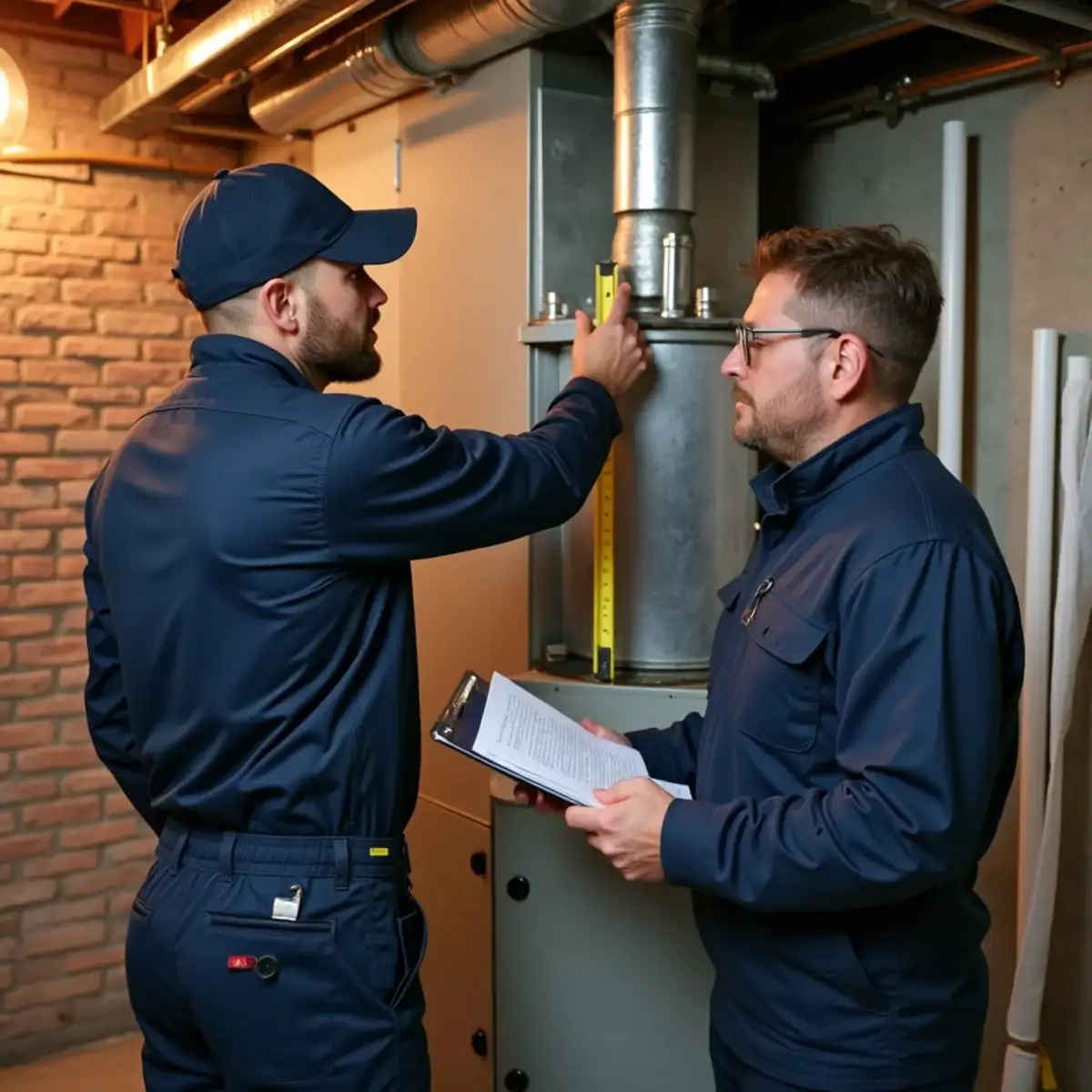
The right way to size is an ACCA Manual J load calculation. It accounts for wall construction, the thermal mass of solid brick, window area, insulation, air leakage and the local design temperature. Equipment is then matched with Manual S, and the existing ducts are checked against the new blower.
Manual J sets the heating load, Manual S picks equipment that matches it, and ACCA Manual D is the method for checking that the ducts can carry the airflow the new furnace needs. In most replacements the existing ducts stay, so the practical step is measuring them rather than redesigning them, then fixing the worst restriction, usually the return.
Ductwork matters as much as the furnace. Pre-war houses with ducts retrofitted into closets and chases often have undersized returns. A technician measures total external static pressure before choosing equipment, because a high-efficiency furnace with a variable-speed blower will only deliver its rated airflow if the ducts allow it.
The load is different for a post-war brick ranch in Penn Hills, a 1960s two-story in Ross Township and a split-level in Bethel Park, even at similar square footage. That is why the calculation is done house by house.
Single-stage, two-stage and variable-speed: what changes in comfort and gas use
Beyond efficiency rating, furnaces differ in how they deliver heat. On a mild October afternoon a house needs a fraction of the heat it needs during a January cold snap, and the staging decides how well the furnace adapts.
- Single-stage. Full fire or off. Simple and dependable, but it cycles more on mild days and the swings between hot and cool are easier to feel.
- Two-stage. Runs on a low fire, roughly two-thirds capacity, most of the season and switches to high only on the coldest days. Longer, quieter cycles and steadier temperatures from floor to floor.
- Modulating. Adjusts the flame in small steps to match the load closely. The most even heat, and the most complex controls to service later.
Pair any of these with a variable-speed ECM blower and the furnace moves air gently at low stages, which helps tall brick houses where heat collects upstairs. Staged furnaces cost more up front and save the most in homes that run heat from October to April.
Staging only works if the thermostat can call for it. A two-stage or modulating furnace on an old single-stage thermostat either runs on high all the time or relies on a timer inside the furnace to step up. Confirm the thermostat is compatible, or that the quote includes one that is, before the install.
Planning a furnace replacement: timing and getting ready for install day
When is the best time to replace a furnace?
Before it fails, if you can. A planned furnace replacement in late summer or early fall leaves time to get written quotes, compare an 80% and a 95% furnace, line up a chimney liner or a new PVC route, and schedule the permit. When a 20-year-old furnace dies on a January night, the choice narrows to what can be installed fastest, and the house may need temporary heat while the venting is sorted out. If your furnace is past 15 years and the repair calls are adding up, a fall estimate costs you nothing but an hour.
How to get ready for installation day
- Clear a path from the door to the basement stairs and from the stairs to the furnace; the old unit goes out the same way the new one comes in
- Move stored boxes, laundry and paint cans at least a few feet back from the furnace, the water heater and the flue
- Know where the electrical panel and the gas meter are, and keep both reachable
- Ask where the condensate drain will run on a 95% furnace, and where the PVC pipes will leave the house
- Confirm who pulls the permit and when the inspection happens
- Plan for the heat being off for most of the day, and keep pets away from the open basement door
Replacement day: removal, gas and vent connections, permit, start-up test
A like-for-like swap is usually a one-day job. Liner work, new PVC runs or duct changes can add time, and you are told up front.
- Permit. Requirements vary by municipality across Allegheny County. Where one is required, it is handled before installation and the inspection is scheduled after.
- Shutdown and removal. Gas and power are shut off, the old furnace is disconnected and carried out of the basement.
- Set and connect. The new furnace is set level, the plenum and return are transitioned, and gas piping is connected with a drip leg and shutoff, then leak tested.
- Venting. PVC is run and terminated, or the flue is connected to B-vent or a new chimney liner. The water heater's venting is checked and corrected if it is now orphaned.
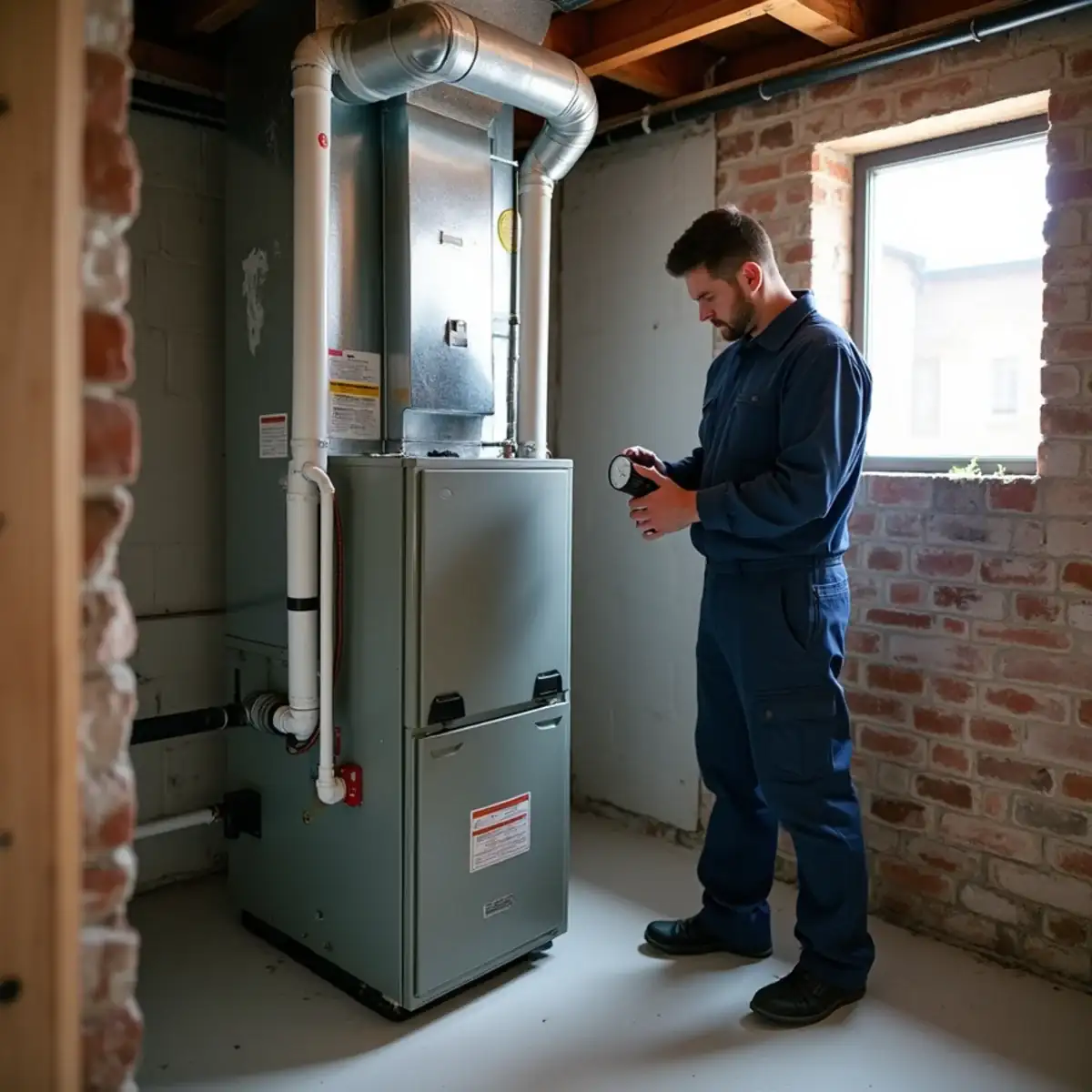
- Start-up test. The technician sets manifold gas pressure on a manometer, runs a combustion analysis, confirms temperature rise is within the data plate range and measures static pressure.
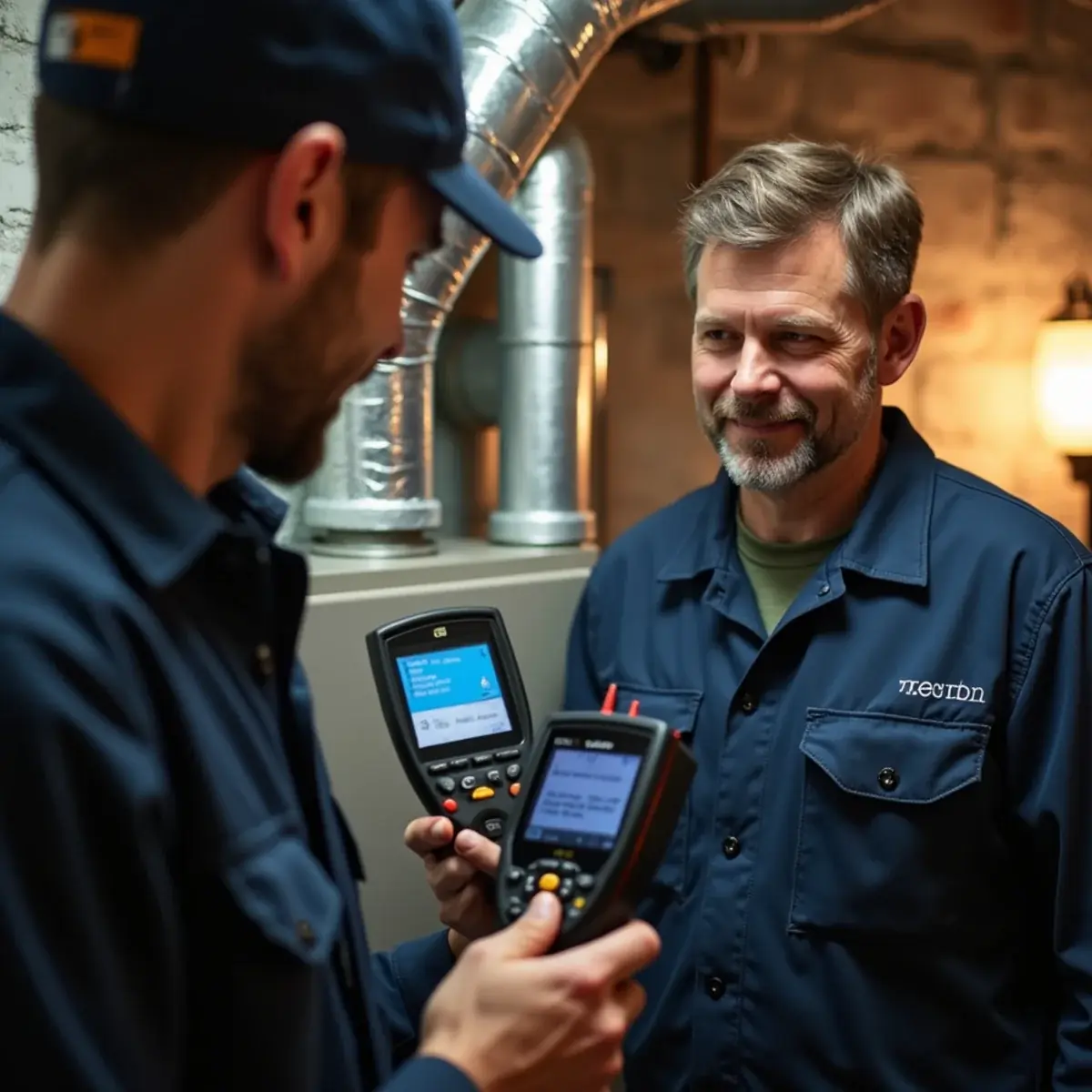
Before leaving, the technician shows you the filter slot, the condensate trap if there is one and the thermostat settings. A yearly furnace tune-up keeps the new unit at its rated efficiency.
What affects furnace replacement cost
No two replacements in Pittsburgh are priced the same, which is why we do not publish a number. The technician looks at the house, then gives you a written price for the full scope before any work starts.
- Efficiency and staging. A 95% two-stage or modulating furnace costs more than a single-stage 80% unit.
- Venting. A chimney liner for the furnace or an orphaned water heater, or a long PVC run to a legal termination, adds labor and material.
- Ductwork. Plenum transitions are routine. Adding a return or resizing trunk lines is not.
- Access. Narrow basement stairs, finished ceilings and tight furnace rooms slow removal and install.
- Condensate handling. No floor drain nearby means a condensate pump and line.
- Permits and timing. Municipal fees and an urgent mid-winter install on a dead furnace both play a part.
Published price ranges, and what to get in writing
Pittsburgh-area HVAC companies and cost guides publish standard gas furnace replacements at roughly $3,500 to $5,800, with another local estimate running $4,150 to $7,500. Those are other companies' figures, not our prices. A high-efficiency two-stage furnace with a liner or new venting lands at the upper end or above, and a like-for-like 80% swap in an easy basement lands lower. Use the ranges to sanity-check a quote, then compare written options line by line.
- At least two written options when time allows, such as an 80% and a 95% furnace, each with the full scope
- A written contract: Pennsylvania's Home Improvement Consumer Protection Act requires one for home improvement jobs over $500, with the price, the work, start and finish dates and your right to cancel
- The contractor's home improvement registration, which you can look up on the Attorney General's contractor registration page, and proof of liability insurance
- Who pulls the permit and schedules the inspection
- Removal and disposal of the old furnace, and any electrical work such as a new service switch or circuit
- The manufacturer's parts warranty, including whether the furnace must be registered within a set time to get the full term, and the installer's labor warranty
For a closer look at these factors, see our guide to furnace replacement cost in Pittsburgh. If the old furnace might still be worth fixing, start with no heat repair. We install across the city and suburbs listed on our service areas page.
Why Pittsburgh homeowners call us for furnace replacement
A written price for the full scope
The quote covers the furnace, venting, liner or PVC work, condensate drain, permit and haul-away, so the number you approve is the number you pay. Nothing starts until you agree.
Sized by calculation, not by the old label
The technician measures the house and the ducts instead of copying the size of the furnace that's coming out, which is how so many Pittsburgh basements ended up with oversized units.
Venting planned before the old furnace comes out
Chimney liners, orphaned water heaters and PVC terminations are worked out at the estimate, not discovered on install day.
Repair first when repair makes sense
If the furnace you have is still sound, you'll hear that, along with what a repair would cost. See no heat repair for that side of the decision.
Licensed where Pennsylvania requires it, and insured
Every HVAC technician we send is licensed where Pennsylvania requires it, and insured, and calls are answered 24/7 at (321) 478-0693.
Furnace Replacement around Pittsburgh
We send furnace technicians across the city and the surrounding suburbs. See how furnace replacement calls play out in these towns, or browse every furnace repair service area.
Also serving Mt. Lebanon, PA, Shaler Township, PA, McCandless, PA, Monroeville, PA.
Furnace Replacement questions from Pittsburgh homeowners
How long does a gas furnace last in Pittsburgh?
Most gas furnaces last about 15 to 20 years. Where yours lands in that range depends on maintenance, sizing and conditions in the basement. Damp Pittsburgh basements rust burners and heat exchangers sooner, and an oversized furnace that short-cycles wears out parts faster. A furnace serviced every fall, with clean filters and correct airflow, tends to reach the far end of that range.
Can a furnace be replaced in one day in the middle of winter?
Often, yes. A straightforward replacement in a reachable basement is usually done in one day, so the house is warm again by evening. A chimney liner, a new PVC vent route, duct changes or a permit inspection schedule can stretch it. During an arctic cold snap, equipment availability and call volume also affect timing. Ask about the full scope up front so there are no surprises on install day.
Do I need a chimney liner with a new furnace?
It depends on the furnace and the chimney. An 80% furnace venting into an unlined or damaged masonry chimney usually needs a liner sized for the appliances connected to it. A 95% furnace does not use the chimney, but the water heater left behind often needs its own liner because the flue is now too large for it. The technician inspects the chimney and confirms what the venting rules require.
Is a high-efficiency furnace worth the extra cost in a Pittsburgh winter?
Usually, yes. With heating season running from October to April, a 95% furnace wastes far less gas than an 80% unit, and the savings grow with long, cold winters. The exception is a house where PVC venting and condensate drainage are hard to route, or where you plan to move soon. The technician compares both options for your house before you decide.
Can I replace a gas furnace myself?
It isn't a DIY job. A furnace swap means cutting into the gas line and leak testing it, sizing and connecting the venting, and running a combustion analysis to confirm the burners are safe, all with test equipment most homeowners don't own. Many municipalities also require a permit and an inspection for furnace replacement. A mistake in any of those steps can cause a gas leak or carbon monoxide in the house.
When is the best time of year to replace a furnace in Pittsburgh?
Late summer through mid-fall, before the furnace is needed every night. That window leaves time for written quotes, a chimney liner or PVC plan, and the permit. Replacing in the middle of a cold snap works, but options narrow to what can be installed quickly.
Page reviewed by the Pittsburgh Furnace Repair team.