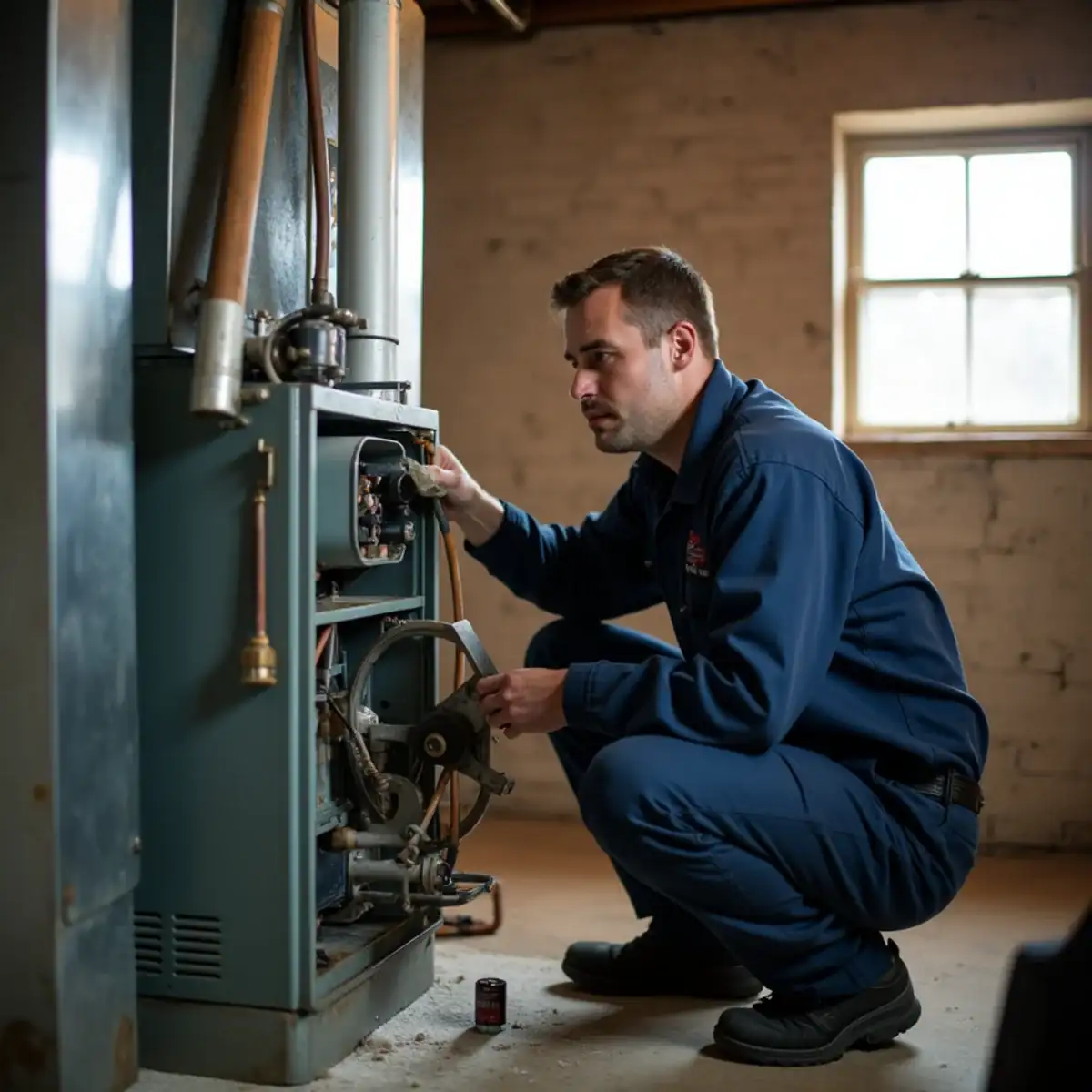
A gas furnace uses two motors. The small inducer motor pulls combustion gases through the heat exchanger and out the vent, and the large blower motor pushes heated air through your ducts. When either one weakens, you hear it, feel it at the registers, or lose heat entirely.
Calls for furnace blower motor repair in Pittsburgh usually sound like one of these: the furnace fan is not working at all, the fan won't shut off, the furnace has turned noisy, or the burners short-cycle because air is not moving across the heat exchanger. Each points to a different part, and a few minutes with a meter tells which one.
Pittsburgh Furnace Repair sends local technicians who test motors instead of guessing at them, and calls are answered 24/7 at (321) 478-0693. Every HVAC technician we send is licensed where Pennsylvania requires it, and insured, and you hear the price before any repair begins.
Symptoms of a failing blower or inducer motor
The two motors fail in different ways, so the symptom tells the technician where to start.
- Blower: a hum with no airflow, weak air at the far rooms, a squeal or grinding at startup, a hot electrical smell, or burners that shut off on the high limit because air is not moving.
- Inducer: a whine or rattle for the first minute of each cycle, a furnace that tries several times then locks out, or a pressure switch fault code on the board.
- Either: short cycling, a tripped breaker, or a motor that is hot to the touch.
Blower motor repair and replacement: PSC and ECM motors
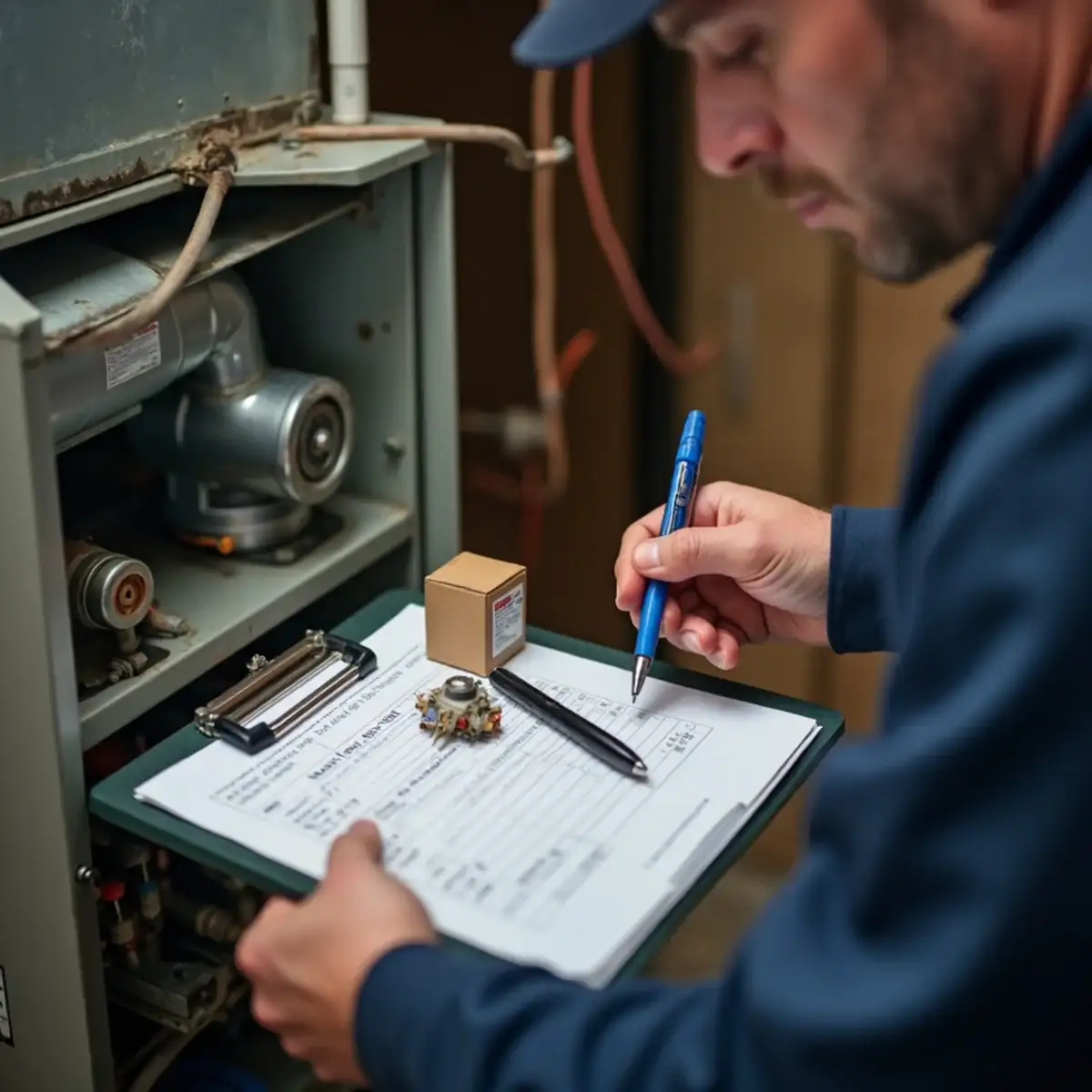
Before replacing a blower motor, the technician confirms it is actually bad. That means measuring amp draw against the nameplate, checking winding resistance, testing the capacitor and confirming the board is sending power on the right speed tap.
| PSC motor | ECM or X13 motor | |
|---|---|---|
| Found in | Most older and many 80% furnaces | Most newer and high-efficiency furnaces |
| Speed control | Fixed speed taps | Programmed torque or airflow settings |
| Needs a run capacitor | Yes | No |
| Electricity use | Higher | Much lower, especially on fan-only |
| Replacement | Universal motors widely available | Often an exact OEM module or a programmed match |
The blower wheel gets attention too. A wheel caked with dust can cut airflow badly, and cleaning it during a motor swap is routine.
Inducer motor and pressure switch faults
The inducer must create enough draft to close the pressure switch before the ignitor is allowed to heat. If its bearings are worn, the wheel is cracked or the housing has water in it, the switch never closes and the furnace stays cold.
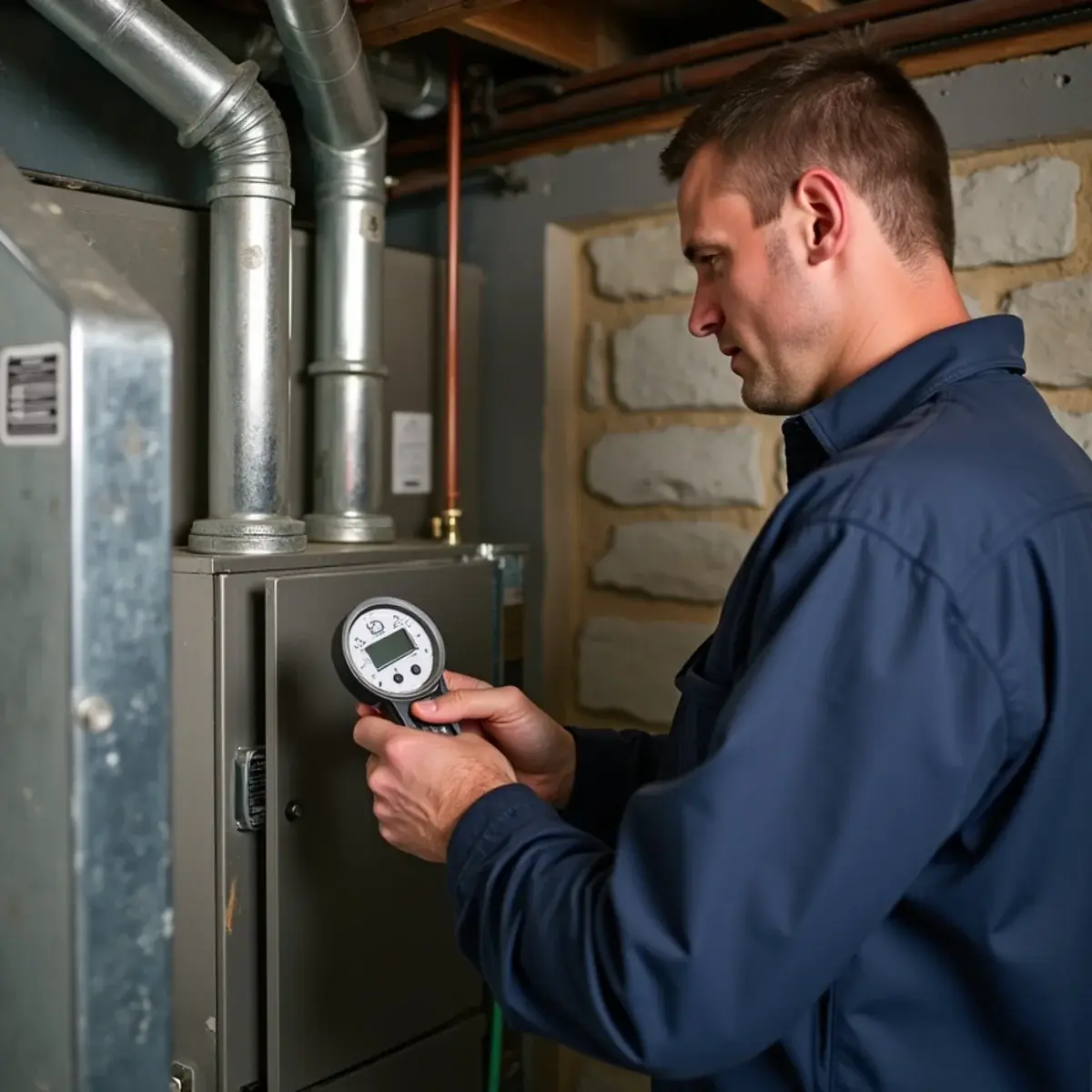
The technician connects a manometer to the pressure switch tap and compares the reading in inches of water column with the switch rating. A weak reading with a clear vent points to the inducer. A strong reading with an open switch points to the switch itself. Cracked hoses and plugged ports are common on high-efficiency furnaces, where condensate can back into the hose. Inducer motor repair usually means replacing the motor assembly, since the bearings on most modern inducers are sealed and not serviceable.
When the furnace gives no heat at all, our no heat repair page covers the other parts of the ignition sequence.
Capacitors, control boards and fan limit switches
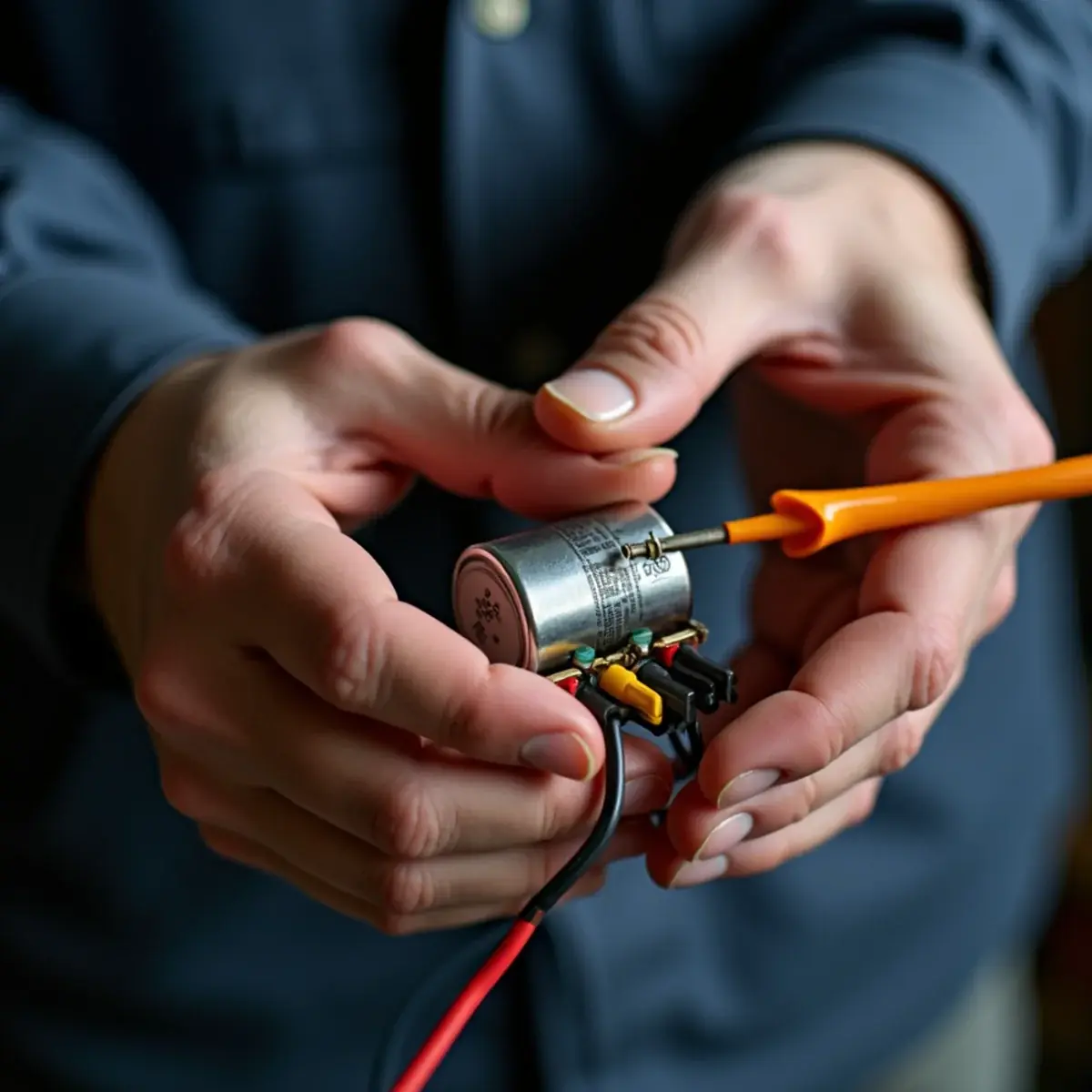
A PSC blower depends on a run capacitor, a small metal can rated in microfarads (µF), commonly 5 to 10 µF on furnace blowers. When it weakens, the motor hums, starts slowly or overheats. The technician reads its capacitance with a meter and replaces it if it falls outside its tolerance or the top is bulging. Some inducer motors use a smaller capacitor of their own, and it gets the same test. Capacitor replacement is the most common blower repair and one of the least expensive, which is why it is tested before anyone condemns the motor.
The control board turns the blower on and off through relays. A welded relay keeps the fan running nonstop, and a burnt one keeps it from starting at all. On older furnaces, a fan and limit control with a temperature dial does the same job and can drift out of calibration or stick.
Furnace noises decoded: squeal, rumble, bang, rattle
Noises are one of the best early warnings. This is what each one usually means.
| Noise | Likely cause | What to do |
|---|---|---|
| Squeal or screech | Dry blower or inducer bearings, or a worn belt on an old belt-drive blower | Schedule repair before the motor seizes |
| Rumble during the cycle | Dirty burners or a combustion problem | Have the burners and flame checked soon |
| Bang at ignition | Delayed ignition from dirty burners or low gas pressure | Turn the furnace off and call |
| Pop or tick as ducts heat | Sheet-metal ducts expanding | Usually harmless |
| Rattle or clank | Loose panel, cracked blower wheel or loose setscrew | Turn it off if it is metal on metal |
A loud bang at startup is worth taking seriously. Delayed ignition lets gas build up before it lights, which stresses the heat exchanger over time.
Weak airflow in older Pittsburgh homes: undersized returns and retrofitted ductwork
Sometimes the motor is fine and the ductwork is the problem. Many pre-war Pittsburgh houses had forced air added decades after they were built, with ducts squeezed into closets and old chases and a single small return in a hallway. The blower cannot move enough air through that system, so rooms at the end of the run stay cool and the motor works harder than it should.
A technician measures total external static pressure across the furnace and compares it with the blower's rating. High readings point to a restrictive filter, a dirty coil, closed dampers, crushed flex duct or too little return. Post-war homes have their own patterns: the ranches of Penn Hills, the two-story colonials of Ross Township and the split-levels of Bethel Park often have long runs to the far bedrooms and disconnected joints in the basement ceiling.
Repair the motor or replace the furnace?
On a furnace under about 12 years old with a sound heat exchanger, a new blower motor or inducer is almost always the sensible repair. On a 20-year-old unit with a rusted burner area and a discontinued OEM motor, the math changes, and spending on one part may only buy a season before the next failure.
- How old is the furnace, and what has been replaced in the last few years?
- Is the heat exchanger in good shape?
- Is the exact motor still available, or would it need a universal adaptation?
- Would a new furnace with a variable-speed blower fix the airflow complaint too?
Our post on whether to repair or replace an old furnace goes deeper, and the furnace replacement page explains what a new install involves.
How a blower motor repair visit works, step by step
The goal is to fix the part that actually failed and leave the furnace moving the right amount of air. A blower motor visit usually runs in this order.
- Confirm the symptom. The technician calls for heat and watches whether the inducer, the burners and the blower each start when they should.
- Test before replacing. Amp draw against the motor nameplate, winding resistance, the run capacitor's microfarads and the board's output on the speed tap separate a bad motor from a bad capacitor, relay or limit control.
- Price the repair. You hear what failed and what it costs before any part is changed.
- Match the replacement. A new motor has to match the old one's horsepower, speed (RPM), rotation, voltage and mounting, or be a universal motor set up to match. ECM motors usually need the manufacturer's part or a programmed module.
- Clean while it's open. The blower wheel and housing are cleaned so the new motor isn't pushing against caked dust.
- Verify the airflow. With the furnace back together, temperature rise and static pressure are measured and compared with the furnace's data plate.
Repair the motor or replace it?
When the motor tests healthy and a support part has failed, such as the capacitor, a wire connector, the board relay or a fan limit control, the fix is that part. Replacement makes sense when the motor overheats and restarts, the bearings growl or squeal, the windings fail an electrical test, or the motor only starts with a push. Lubricating an old sleeve-bearing motor rarely buys more than a short reprieve.
Preventing a repeat failure
- Change or check the filter every month or two during the heating season
- Keep supply registers and return grilles open and clear of furniture
- Have the blower wheel inspected and cleaned at the yearly furnace tune-up
- Ask for the motor's amp reading and the capacitor's microfarad reading in writing, so the next visit has a baseline
What affects the cost of a blower motor repair
The technician gives you a price after testing and before any work starts. These factors make the biggest difference.
- Which part failed. A capacitor is a small repair. A full motor, an ECM module or an inducer assembly is a larger one.
- Motor type. Universal PSC motors are widely stocked. ECM motors often need an OEM part or programming.
- Furnace age and brand. Older or less common furnaces may need a part ordered in.
- Access and condition. A seized setscrew or a corroded mount adds labor.
- Timing. Nights, weekends and holidays can carry different rates, and that is built into the price you approve.
- Warranty. If the furnace is still inside the manufacturer's parts warranty, the motor itself may be covered and you pay labor. Ask for the parts and labor warranty on the repair in writing.
For context, one Pittsburgh-area HVAC company publishes blower motor replacements at roughly $650 to $900, and local cost guides put common furnace repairs at $150 to $600. Those are other companies' figures, not our price list; a capacitor alone usually lands well below them.
See our guide to furnace repair cost in Pittsburgh, or check the communities we serve.
Why call us for furnace blower motor repair in Pittsburgh
The part that failed, proven with a meter
A humming blower is often a weak capacitor or a stuck relay, not a dead motor. Testing first keeps you from paying for a motor you didn't need.
A motor that actually matches
Horsepower, speed, rotation, voltage and mounting are matched to your furnace, and ECM motors are sourced or programmed for the model.
Airflow checked before we call it fixed
Temperature rise and static pressure are measured after the repair, which is how a starved return or crushed duct gets caught instead of killing the next motor.
Price first, 24/7
You hear the price before any work starts, and the phone at (321) 478-0693 is answered day and night.
Licensed where Pennsylvania requires it, and insured
Every HVAC technician we send is licensed where Pennsylvania requires it, and insured, and works on gas furnaces every day.
Blower Motor Repair around Pittsburgh
We send furnace technicians across the city and the surrounding suburbs. See how blower motor repair calls play out in these towns, or browse every furnace repair service area.
Also serving Mt. Lebanon, PA, Shaler Township, PA, McCandless, PA, Monroeville, PA.
Blower Motor Repair questions from Pittsburgh homeowners
Why is my furnace running but no air is coming out of the vents?
Usually the blower is not running while the burners are. The cause may be a failed blower motor, a dead run capacitor, a bad relay on the control board or a blower door switch that is not closed. Without airflow, the high limit trips and the burners cycle off, so you may hear the furnace start and stop. Turn it off at the service switch and call. For other causes of cold vents, see why a furnace blows cold air.
Can I keep running the furnace with a noisy blower motor?
Only briefly, and only if the noise is a mild squeal. A dry bearing can run for days before it seizes, but grinding, metal-on-metal rattling or a hot electrical smell means shut it off now. A blower that slows down also lets the heat exchanger run hotter and trip the high limit. Calling early usually means a simpler repair.
How long does a blower motor replacement take?
Usually a couple of hours or less once the correct motor is on hand. The technician pulls the blower assembly, swaps the motor and capacitor, cleans the wheel, then checks amp draw and temperature rise. An ECM motor that has to be ordered from the manufacturer, or a seized wheel, can add a second visit.
Why does my furnace fan never shut off?
The most common cause is the thermostat fan setting left on On instead of Auto. If the setting is right, the board may have a stuck relay, an older fan and limit control may be set to manual, or a tripped limit switch may be holding the blower on to cool an overheated furnace. A shorted thermostat wire can also do it. The technician tests each in turn.
Can a furnace run with a bad capacitor?
Sometimes, but not well. A weak run capacitor on a PSC blower can let the motor hum, start slowly or not start at all. With no airflow, the heat exchanger overheats, the high-limit switch shuts the burners off and the furnace short-cycles. The capacitor is a small metal can mounted in the blower compartment, near or on the motor; ECM motors don't use one. If the blower hums without turning, switch the furnace off at its service switch and call.
Can I replace a furnace blower motor or capacitor myself?
We don't recommend it. The blower compartment carries line voltage, and a capacitor can hold a charge after the power is off. The replacement also has to match the old motor's horsepower, speed, rotation and voltage, and the airflow should be measured afterward to confirm the furnace isn't overheating. A technician handles all of that in one visit, with a price before the work starts.
How long does a furnace blower motor last?
There's no fixed number. A blower motor that runs against a clean filter and open ducts can last many years, while one fighting a clogged filter, a single small return or a dust-caked wheel runs hot and wears out early. Bearing noise, slow starts and higher amp readings at a tune-up are the signs it's nearing the end.
Page reviewed by the Pittsburgh Furnace Repair team.