The short answer
Furnace replacement in Pittsburgh is commonly estimated at about $3,500 to $5,800 for a standard gas furnace, and another local estimate runs $4,150 to $7,500, according to ranges published by Pittsburgh-area HVAC companies and cost guides. These are not our prices.
The biggest swing comes from the venting: an 80% furnace may need a chimney liner, while a 95% furnace needs PVC venting and a condensate drain. Sizing, permits and ductwork changes add to the total, and our technician gives a firm price before work starts.
Published furnace replacement estimates for Pittsburgh
Ranges published by Pittsburgh-area HVAC companies and cost guides put a standard gas furnace replacement at roughly $3,500 to $5,800. Another local estimate runs from $4,150 to $7,500. The gap between the low and high ends is mostly the work around the furnace, not the furnace itself.
At the lower end you typically find a like-for-like swap: an 80% furnace replacing an 80% furnace in an open basement, with a chimney that already has a sound liner. At the higher end are conversions to a 95% furnace with a new vent route through brick, a liner for the water heater, ductwork changes and two-stage or variable-speed equipment. If the replacement was forced by a cracked heat exchanger, our red-tagged furnace page explains how that diagnosis is confirmed.
80% vs 95% furnaces: the venting decides much of the cost
AFUE is the share of the gas energy that ends up as heat in the house. An 80% furnace sends hot exhaust up a metal flue into a chimney. A 95% condensing furnace pulls so much heat out of the exhaust that it comes out cool and wet, so it vents through PVC pipe and drains condensate.
| 80% AFUE furnace | 95% AFUE furnace | |
|---|---|---|
| Venting | Metal flue into the chimney | PVC intake and exhaust through a wall or roof |
| Chimney | Must draft properly; often needs a liner | Not used by the furnace |
| Condensate | None | Drain line to a floor drain or condensate pump |
| Gas use | Higher | Lower for the same heat output |
| Common extra work | Chimney liner, flue pipe | Vent penetrations, drain, water heater venting |
With winters that run from October into April, the gas savings of a 95% furnace add up in Pittsburgh. Whether they pay back the higher install cost depends on the house, especially the chimney and where the vent pipes can go.
Chimney liners for 80% furnaces in old brick chimneys
Many Pittsburgh houses were built with brick chimneys sized for coal or for much hotter, older furnaces. A modern 80% furnace sends cooler exhaust up that oversized flue. The gases cool before they reach the top, water condenses inside the chimney, and the acidic moisture eats at mortar and clay tile. Draft weakens, and exhaust can spill back into the basement.
The usual fix is a properly sized metal liner run down the chimney. An installer checks the chimney's condition and draft and sizes the liner for the appliances that will use it. In pre-war suburbs like Mt. Lebanon, where many houses were converted to gas furnaces that vent into masonry chimneys, the liner is often a line item on the quote.
95% furnaces: PVC venting, condensate and the orphaned water heater
A condensing furnace needs a route for two PVC pipes to the outside, with the clearances the manufacturer requires from windows, doors, the ground and expected snow levels. In a brick house that means drilling through masonry. The condensate needs a path to a floor drain, or a condensate pump if there is none nearby.
The orphaned water heater problem
In many Pittsburgh basements, the furnace and the gas water heater share the chimney. When a 95% furnace takes the furnace out of the chimney, the water heater is left venting alone into a flue far too big for it. That is called an orphaned water heater. It may not draft well and can condense inside the chimney. The fix is usually a smaller liner for the water heater or a change in how the water heater vents, and it belongs in the quote.
Newer subdivisions such as those in McCandless often already have a high-efficiency furnace with PVC vents in place. Replacing like for like there is usually simpler, though the vent size and route still need to match the new unit's requirements.
Sizing: why a load calculation matters in a brick house
Many old furnaces are oversized. They were sized by rule of thumb, or matched to the unit they replaced, and the house has since gained insulation, new windows and storm doors. An oversized furnace heats in short bursts, cycles constantly, runs louder and leaves rooms uneven.
A Manual J load calculation works out how much heat the house actually loses, room by room, using wall construction, windows, insulation and orientation. The furnace is then chosen to match that load and the airflow the ductwork can carry. A bigger furnace is not automatically better.
Single-stage, two-stage or variable-speed?
| Furnace type | How it runs | Where it pays off |
|---|---|---|
| Single-stage | Full fire or off, every cycle | Simple and lowest first cost; fine in a well-sized, compact house |
| Two-stage | Low fire most of the season, high fire on the coldest days | Longer, quieter cycles and steadier temperatures between floors |
| Modulating with a variable-speed blower | Adjusts the flame and airflow in small steps | The most even heat in tall brick houses, if the ducts can carry the air |
Staged furnaces cost more up front, and the comfort gain depends on the ductwork. That's where the next section's advice about measurements comes in.
Permits, ductwork and the other line items
- Permits: many municipalities require a mechanical permit and inspection for a furnace replacement. Ask who pulls it and whether it is in the price.
- Ductwork changes: a new furnace may need a new plenum or transition, and pre-war houses with ductwork retrofitted later often have undersized returns that need to be corrected.
- Gas and electrical: a new gas shutoff, connector or line change, and an electrical disconnect if the existing one is not up to code.
- Removal and disposal of the old furnace, which can be harder in a basement with narrow, steep stairs.
- Thermostat and filter rack: a two-stage furnace may need a compatible thermostat, and a better filter cabinet improves airflow.
Rebates, timing and scope
Incentives for high-efficiency furnaces come and go, so ask the installer what currently applies, check the ENERGY STAR site, and call your gas utility about any program running this season. Timing affects the price in a different way: a planned replacement in late summer or fall leaves time to compare written quotes and line up liner or PVC work, while an emergency swap in January narrows the choices. This guide covers gas forced-air furnaces; comparing a furnace with a heat pump is a separate decision with its own costs.
From the technician's side: what a finished install should show you
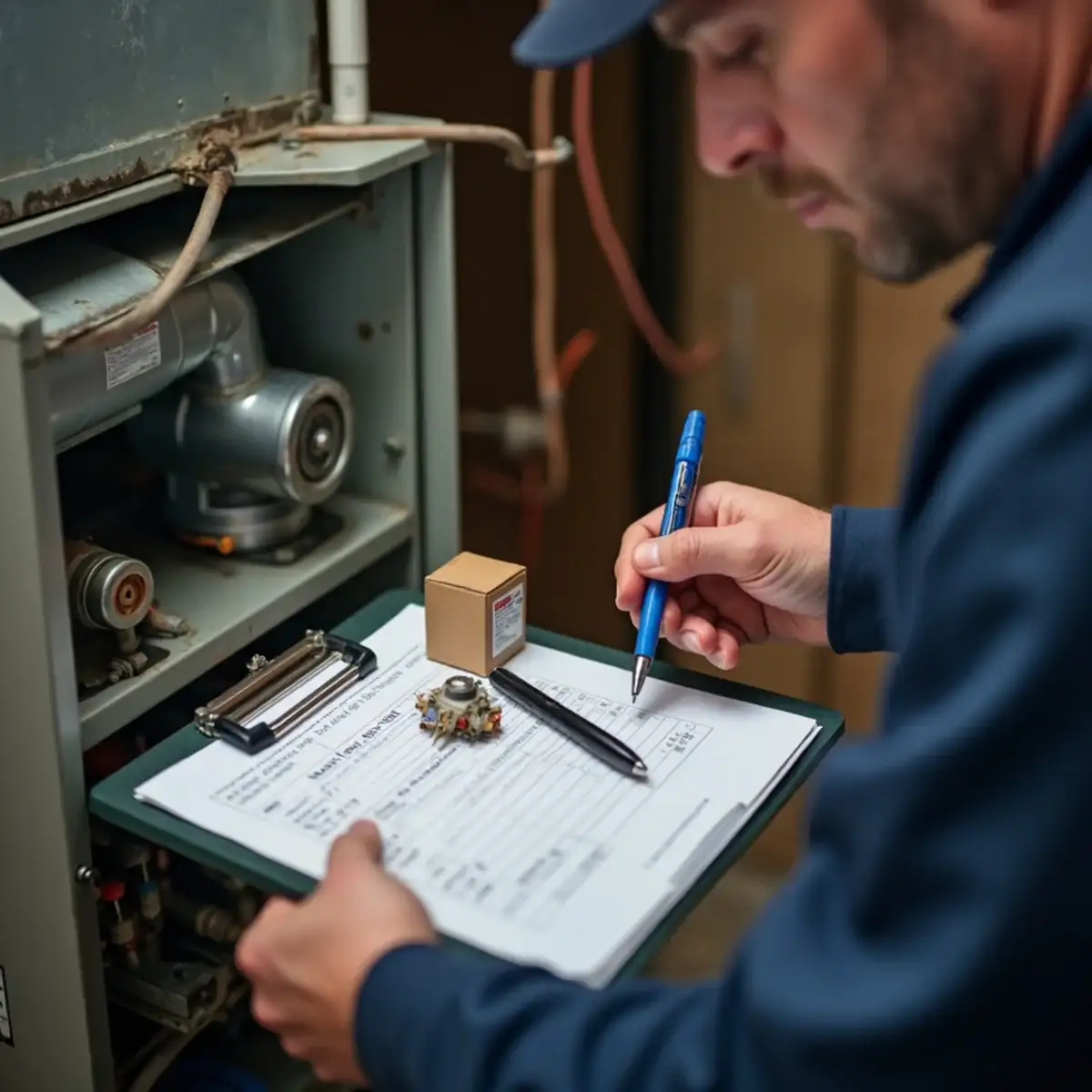
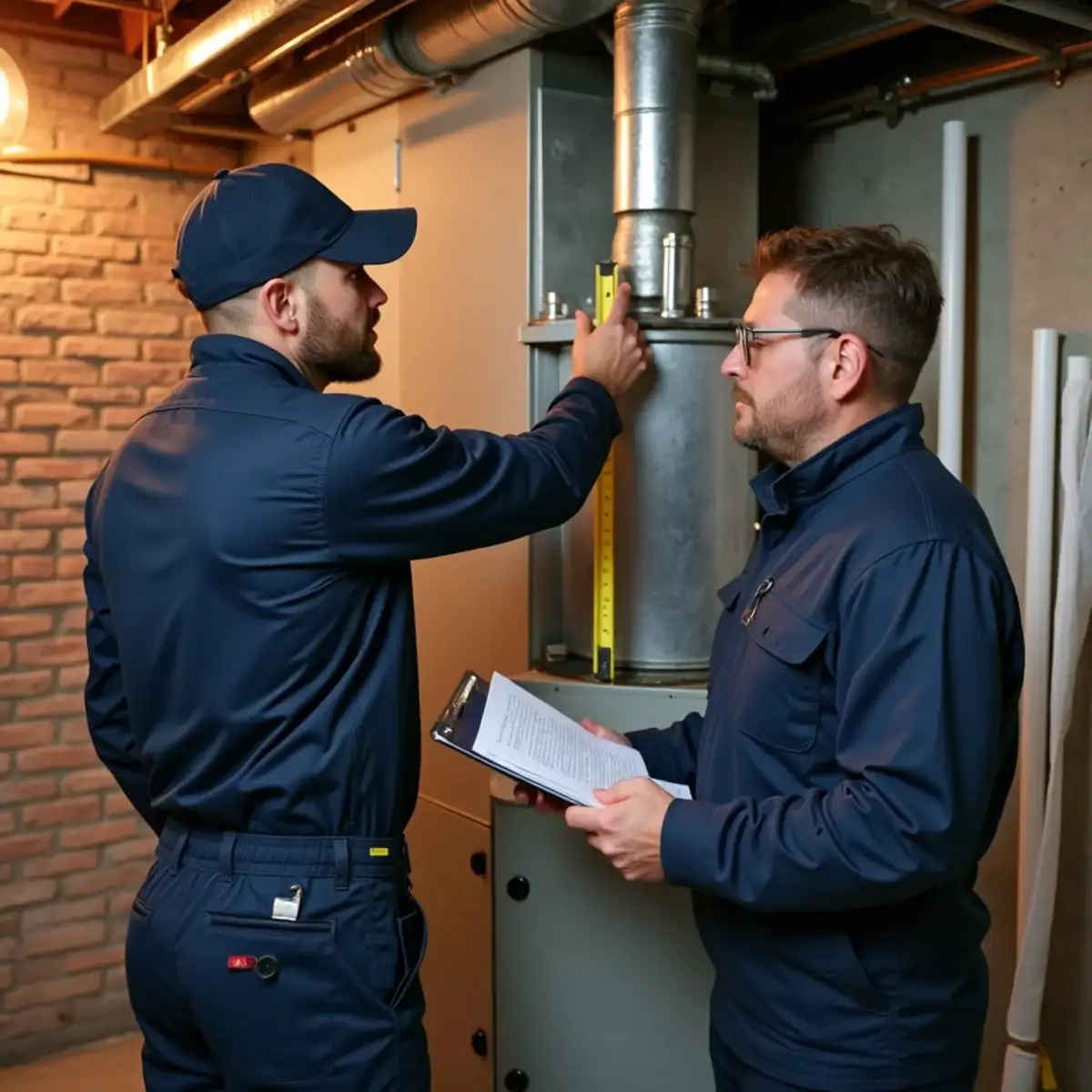
The price on the quote buys a furnace, but what you actually want is a furnace set up correctly for your house. A careful installer finishes by measuring, and you're entitled to see the numbers. Ask for these before the crew leaves:
- Temperature rise across the furnace, inside the range printed on the furnace's data plate
- Manifold gas pressure checked with a manometer and set to the manufacturer's spec
- A combustion analysis, including the carbon monoxide reading in the flue
- On a 95% furnace, the condensate trap primed and draining, and the PVC vents sloped and terminated with proper clearance
- The high-limit, rollout and pressure switches tested, and the chimney draft checked on an 80% furnace or an orphaned water heater
One honest tradeoff: a two-stage or variable-speed furnace only delivers its comfort if the ducts can pass the air. In a Pittsburgh house with a single small retrofit return, fixing the return often does more for comfort than paying for the premium blower. And on a 95% furnace, a two-pipe setup draws combustion air from outdoors, which keeps a dusty or tightly finished basement from starving the burners.
Questions to ask before you sign
- Was a load calculation done, and what size furnace does it call for?
- 80% or 95%, and why for this house?
- Does the chimney need a liner, and what happens to the water heater venting?
- Where will the PVC vents and condensate drain go?
- Is the permit included, and who schedules the inspection?
- What ductwork changes are included?
Comparing quotes on these points shows whether a lower number leaves out work the house needs. Get the job in writing, too: Pennsylvania's Home Improvement Consumer Protection Act requires a written contract for home improvement jobs over $500, with the price, the scope, start and finish dates and your right to cancel, and you can check a contractor's registration on the Attorney General's contractor search. If you are still weighing a repair instead, see how much furnace repair costs in Pittsburgh.
Get a replacement price for your house
Our furnace replacement page covers what to expect on installation day. To get a firm price, call (321) 478-0693. Pittsburgh Furnace Repair answers 24/7 and connects you with a local HVAC technician who looks at the furnace, the chimney and the ductwork before quoting.
Once the new furnace is in, a yearly furnace tune-up keeps the condensate drain, vents and burners in shape so the investment lasts.
Frequently asked questions
Do I need a chimney liner when I replace my furnace?
Often, if the new furnace is an 80% unit venting into an old masonry chimney. Modern furnaces send cooler exhaust that can condense in an oversized or unlined brick flue, damaging the chimney and weakening draft. A technician checks the chimney's condition, size and draft before deciding. If you switch to a 95% furnace, the water heater left in the chimney may need a smaller liner instead.
Is a 95% furnace worth the extra cost in Pittsburgh?
In many homes it is, because Pittsburgh's heating season runs from about October into April and a 95% furnace uses less gas for the same heat. The extra cost is in the PVC venting, condensate drain and any water heater venting changes. In a house where those are easy, the case is strong. Where venting through thick masonry is difficult, an 80% furnace with a liner may make more sense.
Can a furnace be replaced in one day?
A straightforward like-for-like replacement is often a one-day job. Changing from an 80% to a 95% furnace, adding a chimney liner or modifying ductwork can take longer, and the permit inspection may happen on a separate day. In the middle of winter, ask how long the house will be without heat and whether the technician can keep it safe in the meantime.
Sources
Get help with this furnace problem
Servingfurnace repair in Mt. Lebanon, PA,furnace repair in McCandless, PAand nearby towns.