The short answer
Furnace repair in Pittsburgh commonly runs about $150 to $600, according to ranges published by Pittsburgh-area HVAC companies and cost guides, with a diagnostic or service call of roughly $75 to $150. These are other companies' published figures, not our price list, and you get a firm price before any work starts.
Larger parts cost more: one local company publishes $650 to $900 for a blower motor and $350 to $500 for an igniter. Prices vary with the part, the access and the timing of the call.
Published furnace repair prices around Pittsburgh
Pittsburgh Furnace Repair does not publish a price list, because the right price depends on what the technician finds. To give you a sense of scale, here are ranges published by Pittsburgh-area HVAC companies and cost guides.
| Item | Published range | Source note |
|---|---|---|
| Diagnostic or service call | About $75 to $150 | Local cost guides |
| Common furnace repairs | About $150 to $600 | Local cost guides |
| Igniter replacement | $350 to $500 | Published by one local company |
| Blower motor replacement | $650 to $900 | Published by one local company |
What drives the price of a furnace repair
Two homeowners can report the same symptom and get very different bills. These are the factors that move the number most:
Furnace repair cost drivers
- The failed part
- Why it matters: A flame sensor cleaning is a small job; an inducer motor, control board or blower motor is a larger one.
- Furnace type
- Why it matters: High-efficiency condensing furnaces add pressure switches, condensate traps and PVC venting that standard 80% units do not have.
- Brand and parts availability
- Why it matters: Common parts are often on the truck. Brand-specific boards or motors for older units may need to be ordered, which can mean a return trip.
- Access
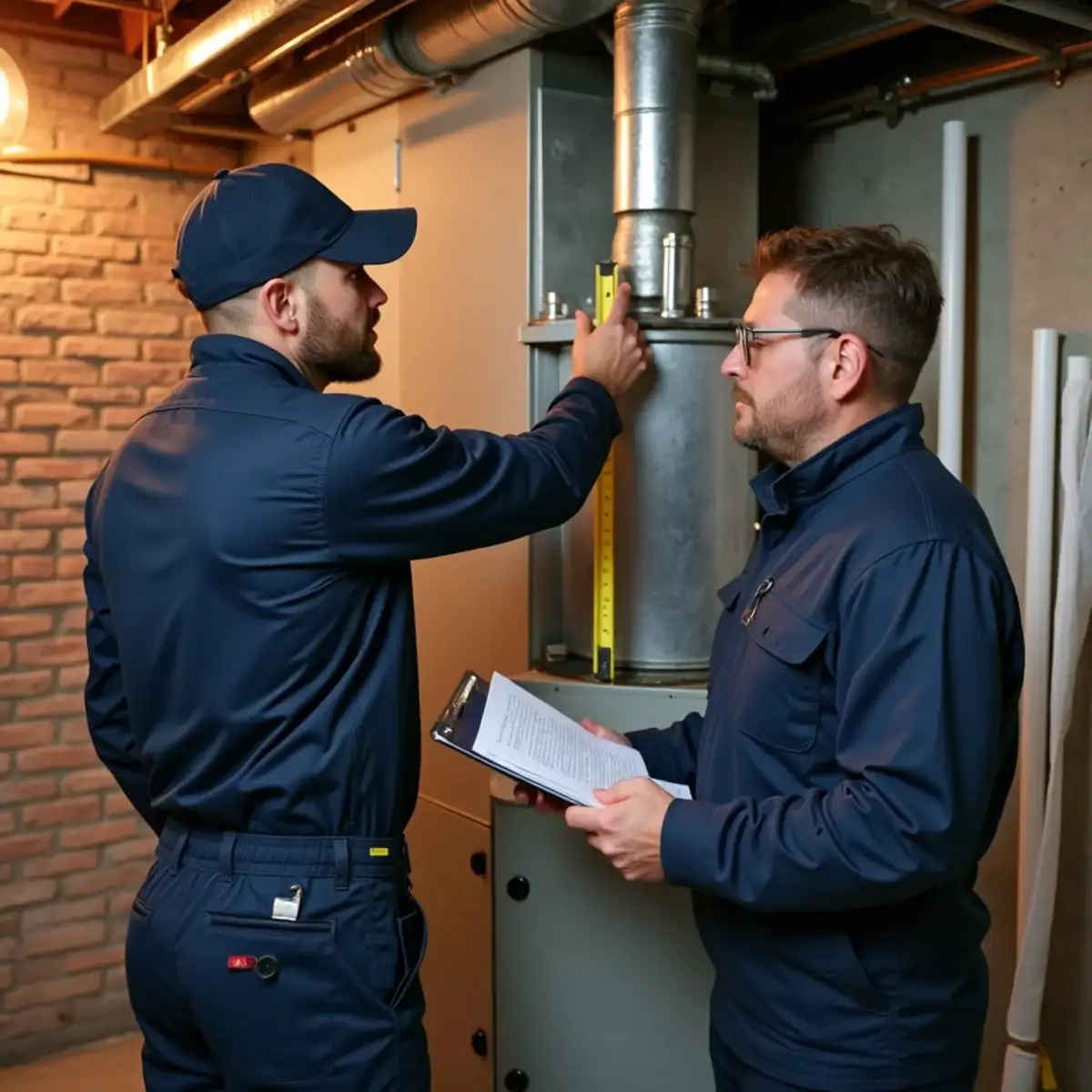
- Why it matters: A furnace at the bottom of steep basement stairs, behind a finished wall or in a tight utility closet takes longer to work on.
- Timing
- Why it matters: Nights, weekends, holidays and cold snaps can change what a visit costs.
- Safety corrections
- Why it matters: A venting, chimney or gas-connection problem found during the repair has to be fixed before the furnace runs.
The repairs behind most no-heat calls
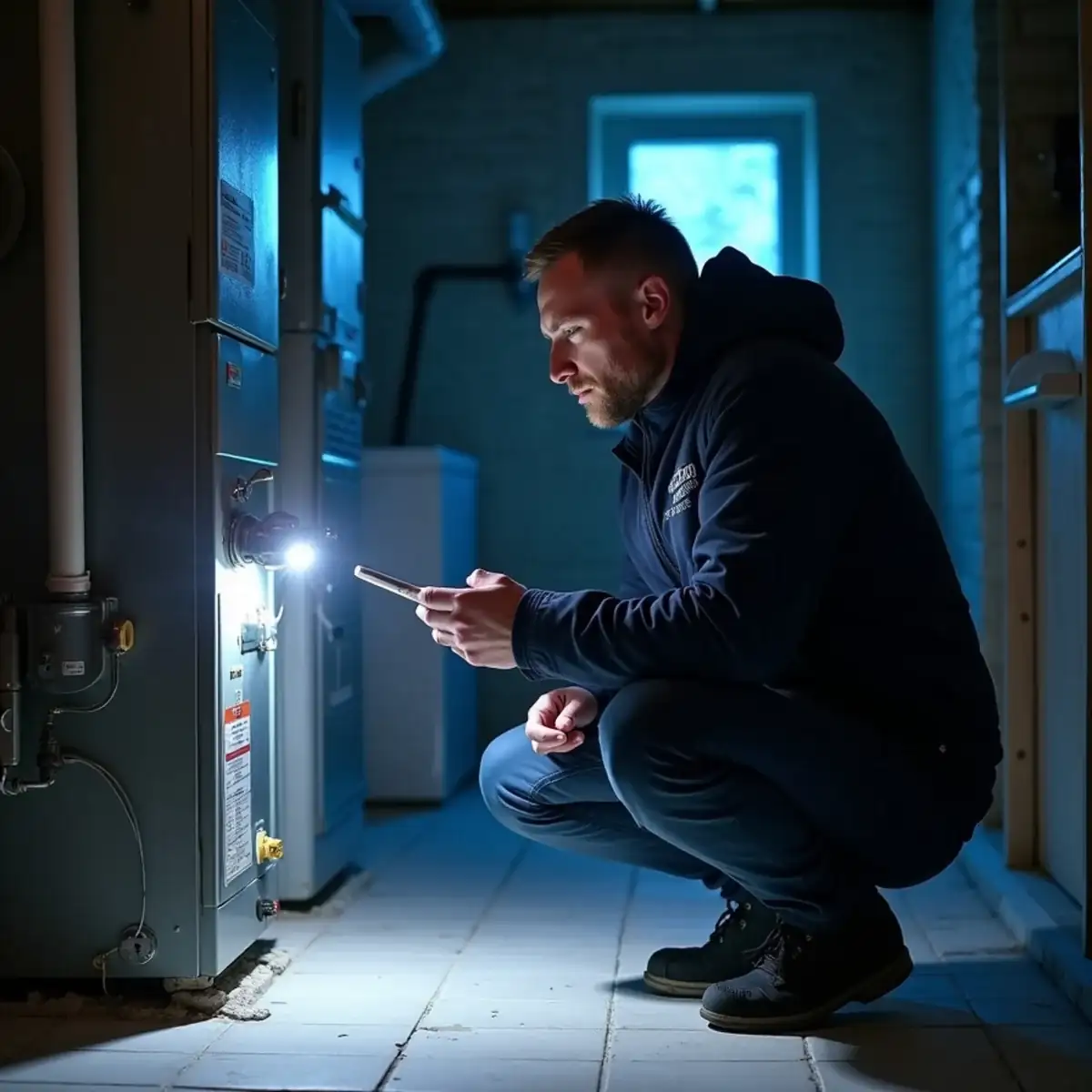
Most no heat repair visits trace back to a short list of parts. Knowing what the technician is testing helps you follow the quote.
Ignitor and flame sensor
A hot surface ignitor is a small ceramic element that glows to light the gas. Ignitors crack with age and often fail at the first cold start of the season. A flame sensor that is coated with residue lets the burners light and then shuts them off after a few seconds. Cleaning a sensor is usually quick; replacing an ignitor is a parts-and-labor job.
Inducer motor and pressure switch
The inducer pulls exhaust through the furnace before ignition, and the pressure switch confirms it is working. A noisy inducer, a cracked hose or a blocked vent can stop the sequence. On high-efficiency furnaces, a frozen condensate line can trigger the same lockout.
Blower motor and capacitor
If the burners light but no air moves, or the furnace hums and shuts off on the high-limit switch, the blower is a suspect. Sometimes the fix is a run capacitor; sometimes the motor itself has failed. Our furnace blower motor repair page goes through PSC and ECM motors and what each repair involves.
Control board
Boards fail from age, power surges and water damage. Damp basements in the creek valleys around Pittsburgh are hard on furnace electronics. A board is one of the pricier parts, so a good technician confirms it with meter readings before replacing it.
Why the same symptom can cost very different amounts
A symptom is not a diagnosis. A furnace that lights and then shuts off might need nothing more than a flame sensor cleaning, or it might have a control board that is misreading the flame signal. The visit looks the same from the thermostat; the bill does not.
High-efficiency furnaces show the same pattern in a deep freeze. A lockout can be a frozen condensate trap that a technician thaws and protects from freezing again, or a failed inducer motor. On older 80% furnaces that vent into brick chimneys, a no-heat call sometimes uncovers a draft problem, and the chimney has to be dealt with before the furnace can run safely. That is why a careful technician tests before quoting and explains which part of the price is the repair and which is a safety correction.
When repair money is better spent on a replacement
Gas furnaces usually last around 15 to 20 years. When a furnace in that range needs a large repair, it is worth comparing the repair price with a new furnace, especially if it has needed several repairs in the last few winters.
- A cracked heat exchanger on an older furnace usually points toward replacement.
- Repeated failures of different parts suggest the rest of the furnace is wearing out too.
- Parts that are discontinued or back-ordered for weeks can make repair impractical in January.
Our guide to furnace replacement cost in Pittsburgh covers what a new furnace involves in an older home.
Questions to ask before you approve a repair
- What part failed, and what test confirmed it?
- Is the diagnostic fee separate, and is it applied to the repair?
- Does the price include parts, labor and any return trip?
- Is there an after-hours or holiday rate, and does it apply now?
- Were any safety problems found with venting, the chimney or the heat exchanger?
- Is the furnace old enough that replacement is worth pricing too?
Getting answers in writing makes it easier to compare quotes line by line. A lower number that skips a safety correction is not a lower total cost. For larger jobs, you can also confirm a contractor's home improvement registration on the Pennsylvania Attorney General's contractor search.
From the technician's side: ask what was measured
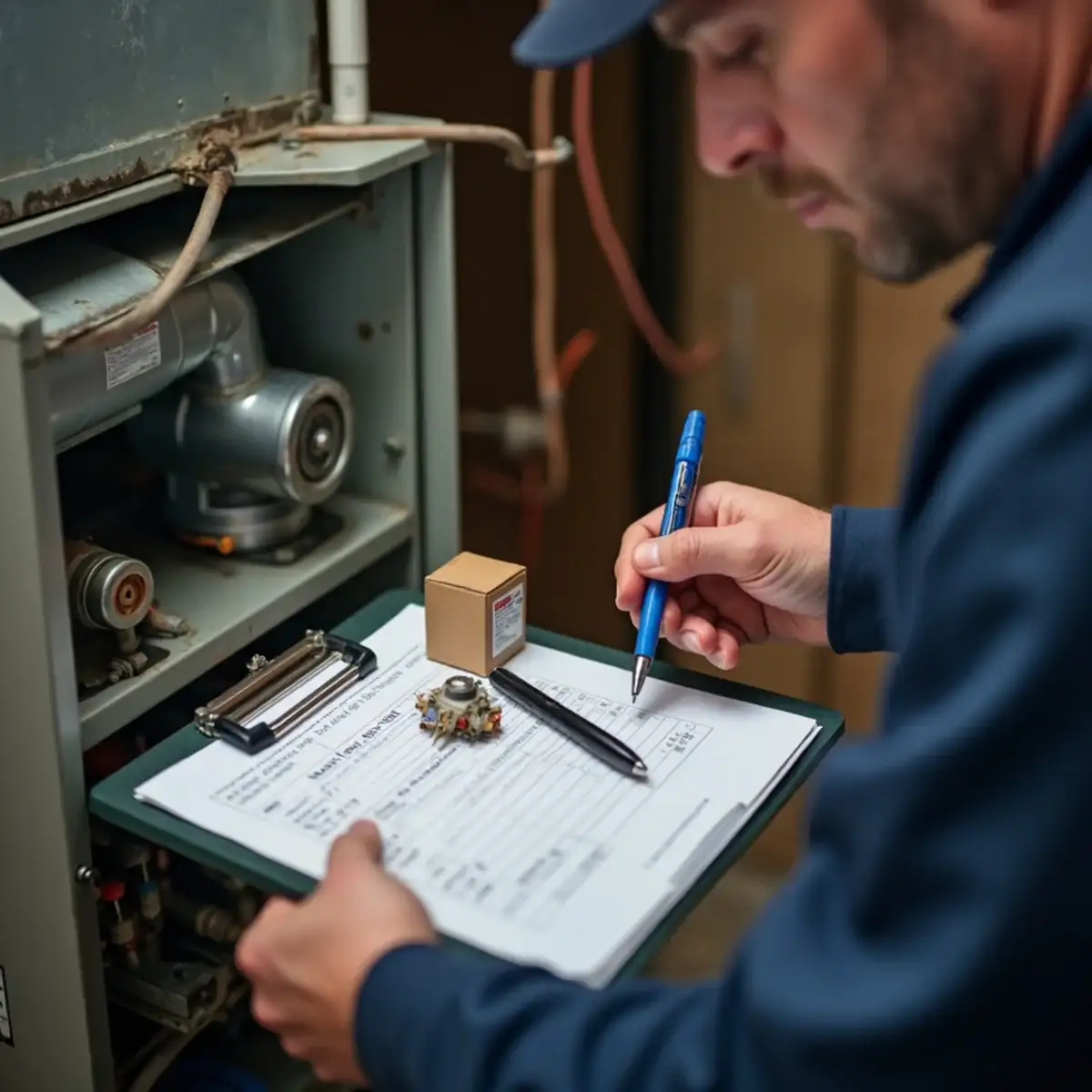
The most useful question you can ask about a furnace repair quote isn't about the price. It's which reading proved the part had failed. Most furnace parts can be tested in a few minutes, and a good technician will tell you the number.
- Flame sensor
- The test that confirms it: Microamp reading of the flame signal, compared with the furnace's spec, before and after cleaning
- Hot surface ignitor
- The test that confirms it: Resistance across the ignitor and the voltage the board sends it
- Run capacitor
- The test that confirms it: Microfarad reading against the rating printed on the can
- Blower motor
- The test that confirms it: Amp draw against the nameplate, plus a capacitor test first
- Pressure switch
- The test that confirms it: Manometer reading of the draft against the switch's rating, with the vent and hose checked
Two patterns are worth knowing. A weak capacitor makes a blower hum and stall exactly like a dead motor, so a motor quote with no capacitor reading deserves a second look. And a pressure switch that won't close is more often a blocked PVC vent, a cracked hose or a frozen condensate trap than a bad switch. Testing first is what keeps a modest repair from turning into an expensive one.
How long does a repair visit take?
Common parts such as flame sensors, ignitors, capacitors and pressure switches are often replaced on the same visit if the technician carries them. Model-specific control boards, inducer assemblies and ECM motors may have to be ordered, which means a second trip, and that's worth knowing before you approve the work.
Ask, too, how long the parts and the labor are warranted, and get it written on the invoice. If you carry a home warranty plan or are thinking of an insurance claim after a flood, read the policy before work starts: plans often cover some parts and failures and exclude others, and they may require their own approved contractor.
Keeping future repair bills down
Many repairs start with airflow. A clogged filter makes the furnace run hot, which wears on the blower motor, the limit switch and the heat exchanger. Changing the filter on schedule costs little and prevents a lot.
A fall furnace tune-up catches a weak ignitor, a dirty flame sensor or a failing capacitor before the first cold snap, when a no-heat call is harder to schedule and more expensive.
Get a firm price for your furnace
Pittsburgh Furnace Repair answers calls 24/7 across Pittsburgh and the surrounding suburbs, from the North Hills down to Bethel Park, where many 1950s to 1970s homes are on replacement-age furnaces. The local HVAC technician we connect you with diagnoses the furnace, explains what failed and gives you a firm price before work starts. Call (321) 478-0693.
Frequently asked questions
Is there a charge just for a technician to look at my furnace?
Most companies charge a diagnostic or service-call fee; ranges published by Pittsburgh-area HVAC companies and cost guides put it around $75 to $150. Those are other companies' figures. When you call (321) 478-0693, ask how the visit is charged and whether the fee applies to the repair. The technician gives you a firm price for any repair before work begins.
Does emergency furnace repair cost more at night or on weekends?
It often does. Many HVAC companies charge more for after-hours, weekend and holiday visits, and demand spikes during Pittsburgh cold snaps. If the house is safe and the pipes are not at risk, waiting for regular hours may cost less. If it is below freezing and the heat is out, an after-hours visit is usually worth it. Ask about timing charges before the technician is dispatched.
Why did my quote cost more than the ranges I found online?
Published ranges cover common, straightforward repairs. Your quote may include a brand-specific part, extra labor for a hard-to-reach furnace, a venting or chimney correction, or after-hours timing. Ask the technician to break the price into parts, labor and any safety work, and to show what test confirmed the failed part. That makes it easier to compare with a second quote.
Sources
Get help with this furnace problem
Servingfurnace repair in Bethel Park, PAand nearby towns.